
Lesion nematodes
Lesion nematodes
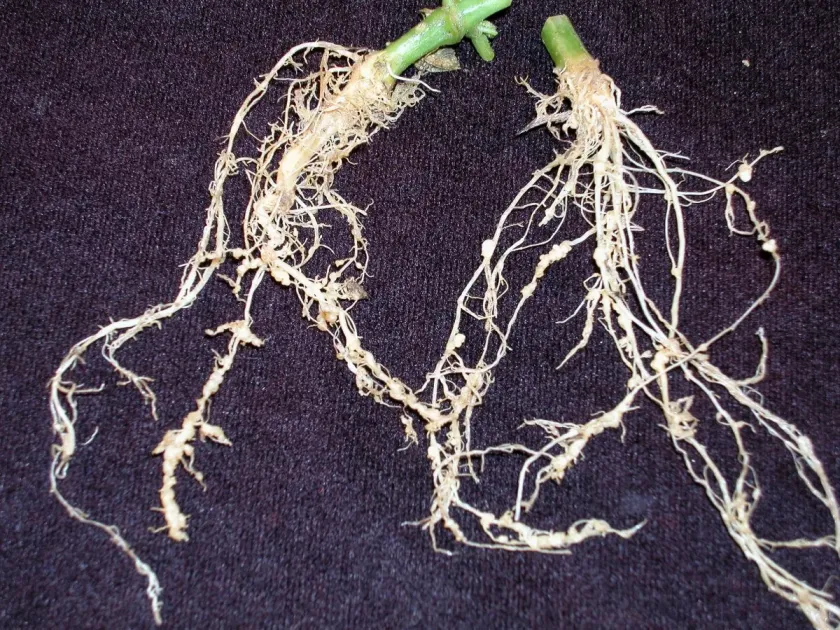
Description
How to identify
Lesion nematodes of the genus Pratylenchus are microscopic roundworms belonging to the order Tylenchida and the family Pratylenchidae.
These organisms are migratory endoparasites, meaning they constantly move through the root cortex, feeding on the interior cells of the host plants.
The life cycle involves an egg stage, four juvenile stages, and an adult stage, all of which can survive in both soil and plant root tissues.
They are characterized by high reproductive rates and the ability to reproduce through parthenogenesis in many species, ensuring quick population booms.
Unlike sedentary nematodes that create visible galls, lesion nematodes leave behind trails of necrotic tissue as they move and feed within the roots.
What it damages
They have an extremely broad host range, causing economic damage to cereals, maize, potatoes, soybeans, and various fruit trees and vegetables.
The damage is caused by the physical destruction of root cells and the subsequent release of enzymes that induce cell wall degradation and necrotic lesion formation.
This feeding behavior severely compromises the root's ability to uptake water and essential nutrients, leading to stunted plant development.
Lesion damage creates entry points for secondary pathogens, such as fungi and bacteria, leading to root rot and systemic plant infections.
As a result, crop yield can drop significantly, especially in poor soil conditions or in fields where plants face environmental stress.
When it appears
Activity typically begins in the early spring as soon as soil temperatures reach a threshold that stimulates nematode movement and feeding.
The population density often peaks in mid-summer when the root systems of crops are fully developed and provide an abundant food source.
Multiple generations can occur within a single growing season, leading to significant increases in soil nematode populations by the time of harvest.
As winter approaches and soil temperatures drop, they enter a state of dormancy, surviving the cold in deeper soil layers or inside old root debris.
They are highly resilient and can remain viable in the soil for years, waiting for the reintroduction of a suitable host plant.
Signs of infestation
Infected crops often appear uneven in the field, with patches of stunted growth, chlorosis, and general signs of nutrient deficiency.
The primary diagnostic feature is the presence of brown, elongated lesions or dark streaks on the roots, which become more visible as they coalesce.
The root system itself often appears decayed and lacks the healthy white appearance of an uninfected root, with reduced lateral branching.
Plants often exhibit symptoms of wilting during the hottest parts of the day because the damaged root system cannot sustain the plant's water needs.
- Stunted aerial growth.
- Dark lesions on the roots.
- Root system browning and rot.
- Decreased yield and poor crop quality.
- Increased susceptibility to environmental stress.
Control measures
Crop rotation remains the cornerstone of management, involving the use of non-host crops to reduce the population levels in the soil over several years.
Good agricultural practices, such as controlling weed reservoirs and using certified pest-free seed, prevent the spread of the nematode across fields.
Selecting and planting resistant crop cultivars is often the most cost-effective solution for large-scale production and commercial farming.
In high-value agricultural systems, soil fumigation or the application of nematicides may be utilized, provided they meet safety and environmental regulations.
Integrated pest management strategies often incorporate soil health improvements, such as adding organic matter to stimulate natural nematode antagonists.
Causes diseases · 1
Discussion
No discussions yet — be the first.