
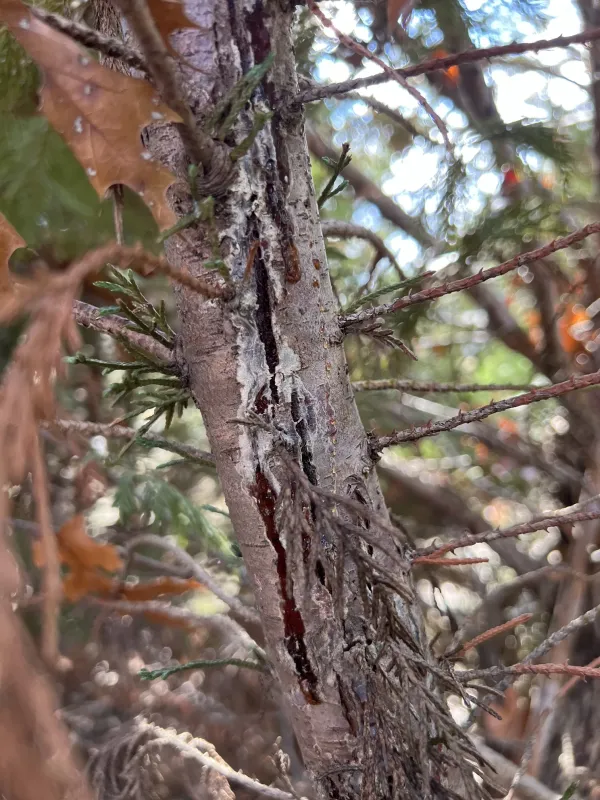
Description
Symptoms
The primary symptom of this disease is the formation of sunken cankers on branches and stems, which gradually expand and girdle the affected area. The bark cracks and dies, and the underlying wood becomes discolored and necrotic, eventually leading to the wilting and death of the branch.
During humid weather, small black fruiting bodies called pycnidia appear on the surface of the infected bark. These structures contain the fungal spores, which are released to spread the infection to healthy tissues or neighboring trees through wind and water splashes.
Leaves on infected branches often turn yellow, curl, and drop prematurely, signaling systemic stress within the tree. In many cases, gummosis (oozing of sap) can be observed at the edges of the cankers, acting as a defense mechanism against the invading pathogen.
The progression of branch dieback usually starts from the tips and moves downward toward the main trunk. If the disease is not managed, the affected canopy becomes thin and unproductive, and the entire tree may eventually lose its structural integrity and die.
When the bark is removed from a suspected area, the necrotic tissues reveal a distinct contrast between the healthy wood and the darkened, decayed area colonized by the fungus. This tissue degradation often extends deep into the sapwood, disrupting nutrient transport.
Pathogen
The pathogen responsible for the disease is the fungus Seiridium unicorne, a member of the Coelomycetes group. It is a facultative parasite that can survive for long periods on infected plant debris, making it a persistent threat in many orchard environments.
The fungus typically enters the host plant through mechanical injuries such as pruning wounds, frost cracks, or sunscald. Once inside, it colonizes the cambium layer, killing cells as it grows and producing toxins that further damage the plant's vascular system.
Its life cycle is heavily dependent on moisture. Spores are dispersed primarily during rainfall, and high humidity levels in the canopy significantly favor spore germination and infection. Insects may also act as vectors, transporting spores between different parts of the tree or to adjacent trees.
Seiridium unicorne is known for its ability to infect a wide range of woody hosts, including various cypress species and fruit trees like the domestic apple. This broad host range makes it difficult to manage if surrounding vegetation is also infected.
The resilience of the fungus in unfavorable conditions allows it to remain dormant within the woody tissue, waiting for the tree to become stressed before it resumes aggressive colonization and expansion of the cankers.
Conditions for development
The disease thrives in warm, humid climates with frequent precipitation. Environments that prevent the rapid drying of bark after rain provide the perfect conditions for the fungus to establish itself and proliferate across the tree's surface.
Poorly pruned or overly dense canopies create a stagnant microclimate where humidity levels remain high, facilitating infection. Proper spacing and thinning of the canopy are essential to ensure adequate air circulation and rapid drying of wood surfaces.
Stressed trees are far more susceptible to Seiridium unicorne. Factors such as drought, waterlogging, nutrient deficiency, or extreme temperature fluctuations (leading to frost damage) weaken the tree’s natural defenses and create entry points for the pathogen.
Improper fertilization, particularly excessive nitrogen in late summer, encourages the growth of succulent, tender shoots that do not harden properly before winter. These shoots are highly vulnerable to frost damage and subsequent fungal invasion.
The presence of previous wounds is the most common condition that triggers an outbreak. Without protective measures, these wounds remain open and act as magnets for fungal spores carried by wind and insects throughout the growing season.
Why it matters
The main harm caused by Seiridium canker is the significant reduction in fruit production and tree health. As the disease kills branches, the tree loses the capacity to produce fruit and eventually becomes completely unproductive, requiring removal.
The disease is progressive and can lead to the death of the entire tree if left unchecked. The loss of established trees represents a major economic blow to orchards, as the long-term investment in tree development is destroyed by the fungal infection.
Infection is highly contagious within an orchard. A single infected tree can become a focal point for spreading spores to all neighboring healthy trees, potentially leading to a widespread epidemic if sanitation measures are ignored.
The weakened wood is prone to secondary colonization by wood-boring insects, which not only accelerates the tree's decline but also increases the risk of structural failure and further pathogen dissemination throughout the orchard.
Managing the disease requires costly inputs, including regular pruning, fungicide applications, and the safe removal/disposal of diseased wood. Failure to implement these measures results in a cumulative decline in orchard efficiency and overall yield quality.
Protection
The cornerstone of management is strict sanitation. All infected branches must be pruned back to healthy wood, and tools must be disinfected after every cut using alcohol or bleach solutions to prevent the mechanical transfer of the fungus to healthy parts of the tree.
Preventive fungicide sprays, particularly those containing copper, should be applied during the dormant season. These treatments help kill surface spores and create a barrier against new infections on the bark.
Maintaining optimal tree health through balanced fertilization and proper irrigation is key to disease resistance. Healthy trees possess the vigor needed to compartmentalize wounds and resist the aggressive spread of the fungal mycelium.
All pruned material should be removed from the orchard and destroyed by burning, as the pathogen can persist on fallen branches for a long time. Never include infected wood in orchard compost piles, as this will spread the disease back to the trees.
- Regular monitoring for early signs of cankers.
- Immediate treatment of pruning wounds with fungicides.
- Ensuring proper spacing and canopy ventilation.
- Using resistant cultivars when planning new orchard plantings.
Pathogens and affected parts
Affects crops · 1
Discussion
No discussions yet — be the first.