
Hoplolaimus
Hoplolaimus
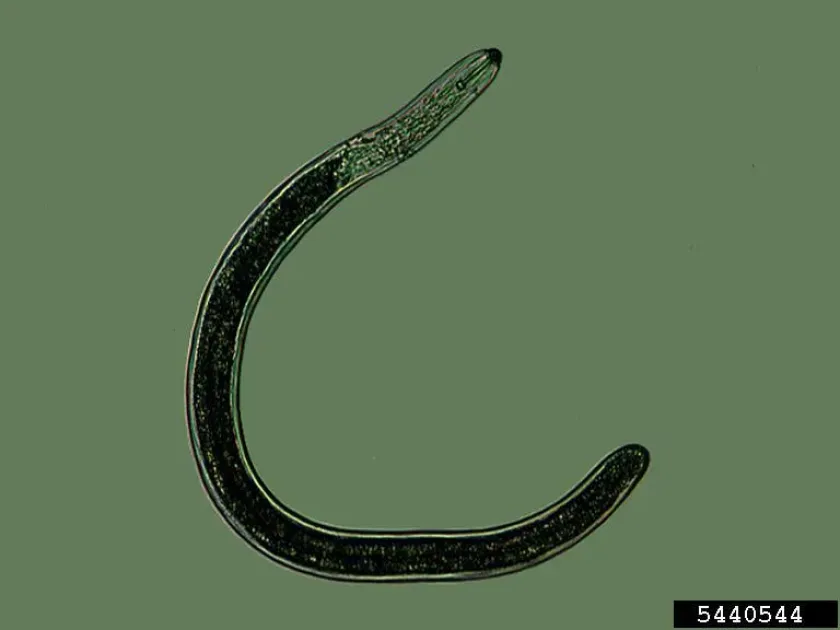
Description
How to identify
The genus Hoplolaimus, commonly referred to as lance nematodes, belongs to the family Hoplolaimidae. These are highly specialized plant-parasitic nematodes characterized by a robust stylet.
They are classified within the phylum Nematoda. Being microscopic organisms, they cannot be identified by the naked eye; laboratory extraction from soil and root samples is required for positive identification.
The morphology of Hoplolaimus includes a thick, heavy body and prominent cephalic sclerotization. These features allow them to physically pierce thick root tissues compared to other nematode species.
Expert diagnostic procedures involve microscopic examination of stylet length, tail shape, and specific cuticular patterns, which are essential for distinguishing between different species within this genus.
Dissemination is largely passive, occurring via the movement of infested soil clinging to farm machinery, irrigation runoff, or the distribution of contaminated nursery plant stock.
What it damages
Hoplolaimus species attack a wide range of crops, including corn, soybeans, cotton, and various ornamental trees. They act as both ectoparasites and endoparasites, causing extensive damage.
By feeding on the cortical and vascular tissues of plant roots, they create tunnels and lesions, which significantly compromise the structural integrity of the root system.
Plants infested with lance nematodes exhibit reduced vigor, poor nutrient uptake, and increased susceptibility to water stress, leading to substantial yield losses in agricultural production.
Sandy or coarse-textured soils provide an ideal habitat for Hoplolaimus, where their movement through soil pores is less restricted, allowing for rapid colonization of new root zones.
The wounds inflicted by the feeding process serve as entry points for various soil-borne fungi and bacteria, leading to severe root rot complexes that can destroy a crop.
Signs of infestation
Above-ground symptoms are often subtle and can mimic nutrient deficiencies or environmental stress, manifesting as stunted, chlorotic, or unthrifty patches within a field.
The most reliable sign is the presence of uneven, patchy growth patterns, where infested areas fail to thrive compared to the rest of the crop under identical management conditions.
Root systems exhibit characteristic lesions, discoloration, and a reduced overall root mass. In severe cases, the taproot may appear damaged or pruned, inhibiting proper anchoring.
During periods of drought or high heat, infested plants wilt much more quickly than healthy plants due to their inability to extract deep-soil moisture efficiently.
Confirmation of the presence of Hoplolaimus requires specialized soil sampling techniques to extract and count the nematodes present in the rhizosphere.
Control measures
Integrated Pest Management (IPM) strategies for Hoplolaimus include long-term crop rotation using non-host species to starve the nematode populations over time.
Chemical control involving nematicides can be employed in high-value cropping systems, although their use is subject to strict environmental regulations and economic thresholds.
Good agricultural practices, such as optimizing soil fertility and managing weeds, help plants compensate for the damage by encouraging vigorous root development.
Sanitation is paramount to prevent the spread of the nematode; all equipment should be thoroughly cleaned of soil before moving from infested fields to uninfested ones.
- Regular soil testing to monitor nematode population densities.
- Utilization of resistant crop varieties when commercially available.
- Implementing cover crops to suppress nematode activity in the soil.
Causes diseases · 3
Discussion
No discussions yet — be the first.