
Description
Symptoms
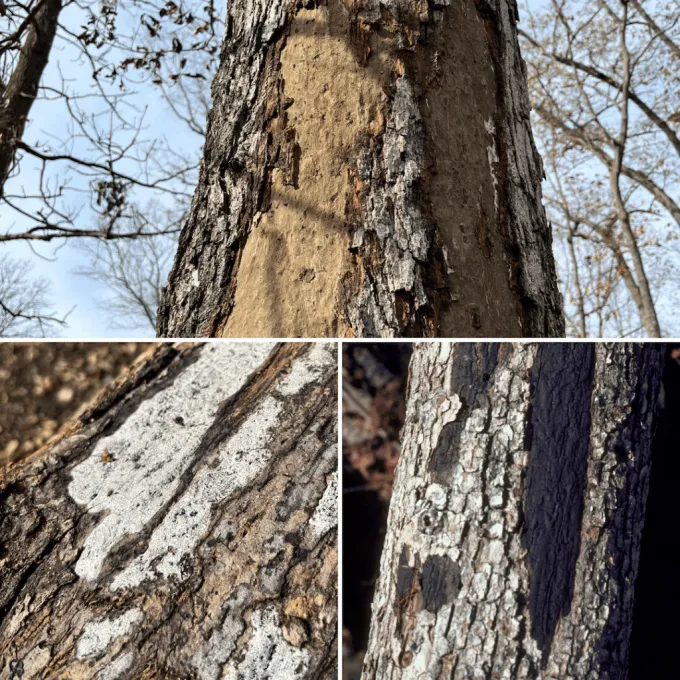
The first and most noticeable symptom of the disease is the yellowing and premature shedding of leaves on individual branches or in the upper part of the crown. As the disease progresses, characteristic flat or slightly raised fungal stromata form on the affected areas of the bark.
As the infection develops, the bark in the affected areas begins to crack, exposing necrotic wood that eventually turns dark, almost black. This phenomenon is often accompanied by the exudation of sap or gumming.
When the dead bark is removed, mycelial mats can be found, which serve as a nutrient medium for the fungus. In the late stages of the disease, branches become brittle and break off easily under wind pressure or their own weight.
The spread of necrosis to the main trunk is particularly dangerous, as it creates large canker areas that disrupt the tree's vascular system and nutrient flow. General decline becomes irreversible without professional intervention.
For accurate diagnosis, it is recommended to conduct a laboratory analysis of the bark tissue, as visual signs in the early stages may resemble other types of necrotic-canker diseases of woody plants.
Pathogen
The causative agent of this disease is the ascomycete fungus Hypoxylon tinctor (also known as Biscogniauxia tinctor), which belongs to the group of saprotrophic and opportunistic pathogenic microorganisms.
The fungus enters plant tissues primarily through mechanical bark damage, sunscald cracks, pruning wounds, or injuries caused by pests. It is capable of existing latently for long periods.
The biology of the fungus is closely linked to the degradation of lignin and cellulose in wood, making the tree extremely vulnerable to structural failure. The pathogen becomes active when the plant's immunity is compromised.
Fungal reproduction occurs through the formation of spores (ascospores), which are dispersed by air currents, rainwater droplets, and insects that carry the infection between weakened trees.
The pathogen's life cycle is adapted to temperate and subtropical climates, where sycamores grow most intensely and are frequently exposed to environmental stressors.
Conditions for development
Hypoxylon canker development is favored by periods of prolonged drought, which significantly weaken the turgor of sycamore cells and lower their natural resistance to infections.
High humidity combined with moderate temperatures creates ideal conditions for sporulation and rapid germination of fungal spores on weakened areas of the bark.
Improper tree pruning without subsequent disinfection of tools is a primary risk factor, as fresh cuts become entry points for the pathogen.
Trees growing under urban stress (air pollution, insufficient watering, soil compaction) are most prone to mass infestation with this fungal disease.
The fungus overwinters inside infected branches and trunks, allowing the source of infection to persist in the tree canopy for several years, gradually expanding the area of damage.
Why it matters
The main danger lies in the rapid dieback of branches, which leads to a loss of ornamental value and poses a threat of falling dry limbs onto pedestrian areas and infrastructure.
When the main leader or the lower trunk is affected, the fungus can cause the death of the entire tree within a few growing seasons, causing significant economic losses in urban landscaping.
Wood infected by the fungus loses mechanical strength, making even large trees potentially hazardous and subject to immediate sanitary removal.
The disease is extremely difficult to treat in late stages because the mycelium penetrates deeply into the phloem and cambium, destroying the tree's conductive system and causing systemic exhaustion.
The spread of spores from infected trees to healthy ones in parks facilitates the formation of infection hotspots, which can lead to the degradation of entire sycamore stands.
Protection
A key preventive method is maintaining a high level of agrotechnology: timely watering, fertilization, and ensuring optimal aeration of the tree's root zone.
All damaged, dead, and fungus-infected branches must be pruned while capturing healthy tissue and immediately destroyed by burning away from the site.
Pruning tools must be regularly disinfected with alcohol or specialized antiseptic solutions after each cut to eliminate the transfer of infection.
For treating wounds and pruning sites, modern garden sealants with fungicidal additives should be used, creating a protective barrier against pathogen spore entry.
Regular monitoring of sycamore health allows for early detection of the disease, where the removal of only affected branches can save the tree and stop the spread of the fungus.
Pathogens and affected parts
Affects crops · 1
Discussion
No discussions yet — be the first.