
Hyaloperonospora galligena
Hyaloperonospora galligena
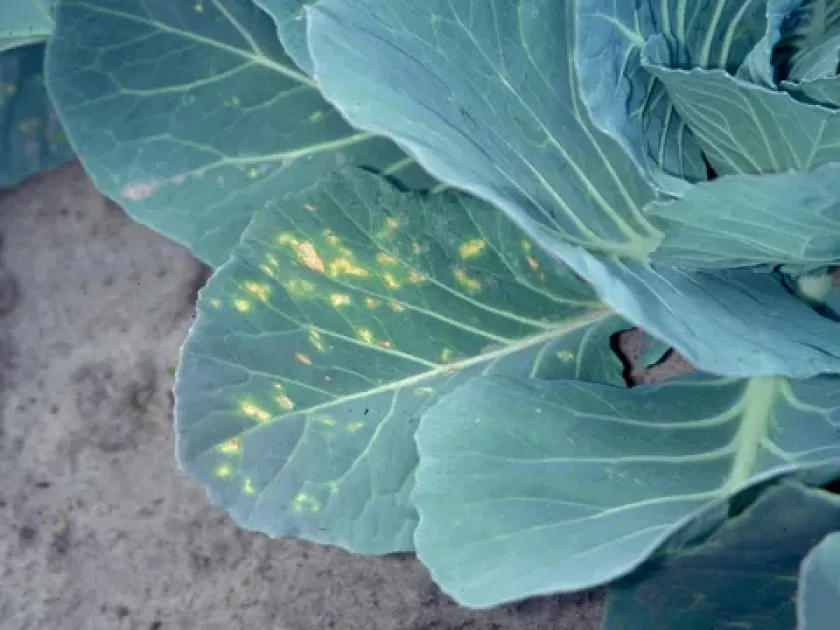
Description
Symptoms
Initial symptoms include the appearance of chlorotic or yellowing patches on the upper surface of the leaves, reflecting the internal infection.
On the underside of the infected leaves, a characteristic whitish or grayish fuzzy growth, consisting of sporangiophores and sporangia, can be observed.
As the disease advances, the affected tissue undergoes necrosis, leading to brown lesions, leaf curling, and premature wilting of the foliage.
A notable characteristic of Hyaloperonospora galligena is its ability to induce the formation of gall-like deformities on infected tissues.
Severe infections manifest as systemic stunted growth and distorted development, which can lead to the total collapse of the plant in susceptible varieties.
Pathogen
The causal agent of this disease is Hyaloperonospora galligena, an oomycete pathogen classified within the group that causes downy mildew.
It is an obligate parasite, meaning it requires living host tissue, specifically from the Brassicaceae family, to complete its life cycle.
The pathogen utilizes sporangia to disperse, which rely on water droplets to move and infect the epidermal cells of susceptible host plants.
Once inside the plant, the pathogen develops a mycelial network that absorbs nutrients through haustoria, weakening the plant host over time.
The disease can persist through the production of oospores, which are thick-walled resting structures that allow the pathogen to survive adverse conditions.
Conditions for development
High relative humidity, typically exceeding 85 percent, is the most critical environmental factor for the successful infection and spread of the disease.
The pathogen thrives in cool to moderate temperature regimes, with optimal development occurring between 12 and 18 degrees Celsius.
Prolonged periods of leaf wetness, often caused by heavy dew, fog, or frequent rainfall, are essential for the germination of spores.
Poor air circulation within dense plant canopies creates a microclimate that facilitates the rapid spread of the pathogen from one plant to another.
The presence of infected debris from the previous season serves as the primary inoculum source, significantly increasing the probability of outbreaks.
Why it matters
The disease significantly reduces the photosynthetic capacity of the plant by destroying chlorophyll-rich leaf tissue, resulting in lower yields.
Plants affected by this pathogen often lose their marketability due to aesthetic damage and decay, causing substantial financial losses for growers.
Systemic damage impairs the plant's overall vigor, making it less resilient to environmental stresses such as drought or secondary pest attacks.
Yield reduction is most severe when infection occurs early in the development of the crop, limiting the potential for biomass accumulation.
In highly susceptible crops, unchecked spread can cause massive defoliation, leading to the complete failure of the harvest on specific fields.
Protection
Implementing a strict crop rotation program by excluding host species for at least three to four years helps break the pathogen's life cycle.
Rigorous sanitation practices, including the removal and destruction of crop residues, significantly reduce the primary inoculum load in the field.
Selecting and planting resistant or tolerant cultivars remains the most effective long-term strategy for managing the disease in commercial fields.
Managing the plant density and controlling cruciferous weeds can improve aeration and create less favorable conditions for pathogen development.
When environmental conditions favor the disease, the application of targeted fungicides serves as an essential tool to prevent and curb the infection.
Discussion
No discussions yet — be the first.