
Description
Symptoms
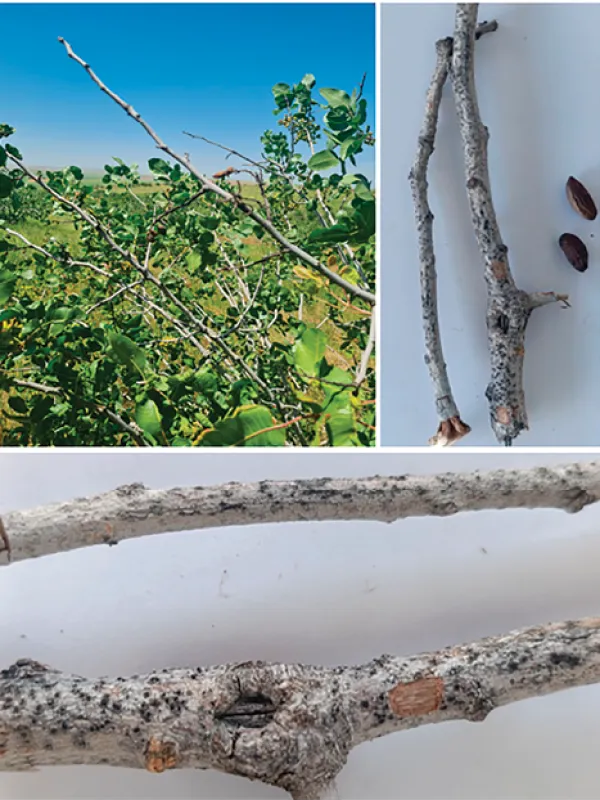
The primary symptom is the development of necrotic areas (cankers) on the trunks and scaffold branches. The affected bark darkens, becomes necrotic, and often appears slightly sunken.
As the disease advances, numerous tiny pimple-like structures, known as pycnidia, erupt through the bark. This gives the surface a rough, grainy, or "goosebump" texture.
Progressive drying of twigs and branches is common. Leaves on the infected limbs may turn yellow, curl, and drop prematurely, indicating severe stress in the vascular system.
Exposing the inner bark in infected zones typically reveals a brown, decaying wood appearance, which serves as a diagnostic indicator of fungal colonization.
In advanced cases, the canker may encircle the stem or branch, cutting off water circulation and leading to the eventual death of the portion above the lesion.
Pathogen
The disease is caused by the fungus Cytospora terebinthi, which belongs to the class of Ascomycetes. This pathogen is a destructive parasite that targets the bark and vascular system of mature perennial trees.
The fungus survives in dead plant debris, deep bark cracks, and within existing cankers. Spores are primarily disseminated by water splashes, wind, and insect vectors.
Infections on pistachio trees usually initiate through mechanical injuries, such as pruning wounds, frost cracks, or sites damaged by wood-boring insects.
The biological cycle of the fungus involves the formation of pycnidia, which appear as small bumps on the bark surface. Under humid conditions, these structures release spores that infect surrounding healthy tissues.
The pathogen aggressively colonizes plant tissues, disrupting nutrient transport and eventually causing localized tissue death that can escalate to severe damage.
Conditions for development
Mechanical stress, such as frost-induced bark splitting or sunscald, creates perfect entry points for the Cytospora terebinthi pathogen to invade the wood.
High humidity and prolonged periods of rainfall are critical factors that facilitate spore germination and rapid fungal growth on the bark surface.
Pistachio trees that are already weakened by drought, nutrient deficiencies, or pest infestations are significantly more vulnerable to successful infection.
Poor orchard sanitation, including improper pruning techniques and the presence of dead wood, provides a reservoir for the fungus to multiply and spread.
The pathogen thrives in various climatic conditions but exhibits peak activity during cool, moist periods when the tree is transitioning between dormancy and growth.
Why it matters
The cryptic nature of the disease often leads to delayed diagnosis, by which time the fungus may have already caused extensive damage to the tree's internal structure.
Pistachio orchards face reduced yields as the pathogen destroys the branches responsible for nut production, causing fruit shriveling or premature drop.
If the main trunk is girdled by a canker, the entire tree may perish, forcing the grower to perform costly removals and orchard replacements.
The disease spreads rapidly within a planting if sanitation is neglected, potentially turning a productive orchard into a source of widespread fungal contamination.
Financial impact is significant, encompassing lost harvest revenue, increased labor for disease management, and the high cost of maintaining tree health in endemic areas.
Protection
A successful management strategy relies on strict cultural practices to boost tree vigor and minimize physical injury to the bark.
- Rigorous sanitation by pruning and removing all infected or dead wood promptly.
- Sanitizing pruning tools between each tree using alcohol or copper-based solutions to prevent spore spread.
- Applying wound sealants to large pruning cuts to protect against moisture and fungal entry.
- Painting the trunk and base of large limbs with white latex paint to reflect sunlight and prevent sunscald/frost cracking.
- Applying copper-based fungicidal sprays during dormant seasons to reduce spore pressure and protect exposed bark.
Pathogens and affected parts
Affects crops · 1
Discussion
No discussions yet — be the first.