

Reference · Diseases
Viral diseases
Viral plant diseases are conditions caused by phytoviruses, which are submicroscopic infectious agents consisting of genetic material (DNA or RNA) enclosed in a protein coat. Being obligate intracellular parasites, they must enter a host cell to replicate, where they disrupt normal metabolic pathways, leading to systemic physiological stress in the plant organism.
2 061
items
What the section contains
 Cotton leaf curl virus
Begomovirus gossypii
Cotton leaf curl virus
Begomovirus gossypii
 Cotton leaf curl virus
Begomovirus gossypigeziraense
Cotton leaf curl virus
Begomovirus gossypikokranense
Cotton leaf curl virus
Begomovirus gossypimultanense
Cotton leaf curl virus
Begomovirus gossypimaculae
Cotton leaf curl virus
Begomovirus gossypibarasatense
Cotton leaf curl virus
Begomovirus gossypiflavi
Cotton leaf curl virus
Begomovirus sidamusivi
Cotton leaf curl virus
Begomovirus gossypigeziraense
Cotton leaf curl virus
Begomovirus gossypikokranense
Cotton leaf curl virus
Begomovirus gossypimultanense
Cotton leaf curl virus
Begomovirus gossypimaculae
Cotton leaf curl virus
Begomovirus gossypibarasatense
Cotton leaf curl virus
Begomovirus gossypiflavi
Cotton leaf curl virus
Begomovirus sidamusivi
 Cotton phyllody
Cotton small leaf agent
Cotton phyllody
Cotton small leaf agent
 Cotton terminal disease
Cotton terminal stunt agent
Cotton veinal yellowing
Cotton veinal mosaic agent
Cotton terminal disease
Cotton terminal stunt agent
Cotton veinal yellowing
Cotton veinal mosaic agent
 Cotton virescence
 agent
Cotton virescence
Cotton virescence agent
 Cowpea chlorotic mottle virus
Bromovirus ccmv
Cowpea chlorotic mottle virus
Bromovirus ccmv
 Cowpea mosaic
Gammacarmovirus vignae
Cowpea mosaic
Gammacarmovirus vignae
 Cowpea mosaic virus
Potyvirus vignae
Cowpea mosaic virus
Carlavirus vignae
Cowpea mosaic virus
Potyvirus vignae
Cowpea mosaic virus
Carlavirus vignae
 Cowpea mosaic virus
Comovirus vignae
Cowpea mosaic virus
Sobemovirus cfmv
Cowpea rugose mosaic virus
Comovirus rugomusivum
Crassocephalum yellow leaf curl virus
Begomovirus crassocephali
Cowpea mosaic virus
Comovirus vignae
Cowpea mosaic virus
Sobemovirus cfmv
Cowpea rugose mosaic virus
Comovirus rugomusivum
Crassocephalum yellow leaf curl virus
Begomovirus crassocephali
 Cressdnaviricota
Cressdnaviricota
Cressdnaviricota
 Crinivirus
Crinivirus
Crinivirus
 Crinivirus contagichlorosis
Crinivirus diodiae
Crinivirus diodiae
Crinivirus contagichlorosis
Crinivirus contagichlorosis
Crinivirus diodiae
Crinivirus diodiae
 Crinivirus pseudobetae
Crocus mosaic virus
Potyvirus croci
Cucumber alphaendornavirus
Alphaendornavirus cucumis
Crinivirus pseudobetae
Crinivirus pseudobetae
Crocus mosaic virus
Potyvirus croci
Cucumber alphaendornavirus
Alphaendornavirus cucumis
 Cucumber carlavirus
Carlavirus cucumis
Cucumber carlavirus
Carlavirus cucumis
 Cucumber chlorotic spot virus
Begomovirus chlorocucumis
Cucumber chlorotic spot virus
Begomovirus chlorocucumis
 Cucumber golden mosaic
Aureusvirus cucumis
Cucumber golden mosaic
Aureusvirus cucumis
 Cucumber green mottle mosaic virus
Robigovirus viridiavii
Cucumber green mottle mosaic virus
Robigovirus viridiavii
 Cucumber green mottle mosaic virus
Tobamovirus cucurbitae
Cucumber green mottle mosaic virus
Tobamovirus cucurbitae
 Cucumber green mottle mosaic virus
Tobamovirus cucumeris
Cucumber green mottle mosaic virus
Tobamovirus cucumeris
 Cucumber leaf curl virus
Begomovirus cucumismusivi
Cucumber mechlorovirus
Mechlorovirus cucumeris
Cucumber mosaic
Comovirus cucurbitae
Cucumber leaf curl virus
Begomovirus cucumismusivi
Cucumber mechlorovirus
Mechlorovirus cucumeris
Cucumber mosaic
Comovirus cucurbitae
 Cucumber mosaic
Cucumovirus tav
Cucumber mosaic
Cucumovirus tav
 Cucumber mosaic virus
Cucumovirus cmv
Cucumber mosaic virus
Tymovirus cucumis
Cucumber mosaic virus
Cucumovirus gmmv
Cucumber necrosis virus
Tombusvirus cucumis
Cucumber mosaic virus
Cucumovirus cmv
Cucumber mosaic virus
Tymovirus cucumis
Cucumber mosaic virus
Cucumovirus gmmv
Cucumber necrosis virus
Tombusvirus cucumis
 Cucumber ringspot virus
Nepovirus cucumis
Cucumber toadskin
Cucumber toadskin virus
Cucumber ringspot virus
Nepovirus cucumis
Cucumber toadskin
Cucumber toadskin virus
 Cucumber vein yellowing
Ipomovirus cucumisvenaflavi
Cucumber vein yellowing
Ipomovirus cucumisvenaflavi
 Cucumovirus
Cucumovirus
Cucumovirus
 Cucurbit aphid-borne yellows virus
Polerovirus cabyv
Cucurbit begomovirus
Begomovirus cucurbitachinaense
Cucurbit begomovirus
Begomovirus cucurbitamaximae
Cucurbit aphid-borne yellows virus
Polerovirus cabyv
Cucurbit begomovirus
Begomovirus cucurbitachinaense
Cucurbit begomovirus
Begomovirus cucurbitamaximae
 Cucurbit chlorosis
Orthotospovirus cucurbichlorosis
Cucurbit crinivirus
Crinivirus cucurbitae
Cucurbit chlorosis
Orthotospovirus cucurbichlorosis
Cucurbit crinivirus
Crinivirus cucurbitae
 Cucurbit fabavirus
Fabavirus cucurbitaceae
Cucurbit fabavirus
Fabavirus cucurbitaceae
 Cucurbit leaf curl virus
Begomovirus cucurbitae
Cucurbit leaf curl virus
Begomovirus cucurbitae
 Cucurbit leaf curl virus
Begomovirus cucurbitaphilippinense
Cucurbit necrotic yellows virus
Potyvirus esculentinecrosis
Cucurbit leaf curl virus
Begomovirus cucurbitaphilippinense
Cucurbit necrotic yellows virus
Potyvirus esculentinecrosis
 Cucurbit vein yellowing virus
Ipomovirus cucurbitavenaflavi
Currant capillovirus
Capillovirus alpharibis
Cucurbit vein yellowing virus
Ipomovirus cucurbitavenaflavi
Currant capillovirus
Capillovirus alpharibis
 Currant ring spot virus
Nepovirus ribis
Currant ring spot virus
Nepovirus ribis
 Curtovirus
Cycad necrotic stunt virus
Nepovirus cycas
Cyclamen mosaic virus
Sobemovirus cycmv
Curtovirus
Curtovirus
Cycad necrotic stunt virus
Nepovirus cycas
Cyclamen mosaic virus
Sobemovirus cycmv
Marketplace
Products in this section · 12


Viral diseases
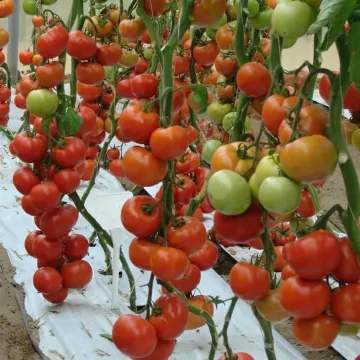
These diseases affect a diverse range of botanical families, posing significant threats to cereals, vegetables, legumes, and perennial fruit crops. Major economically significant infections include potato mosaic virus, cucumber mosaic virus, and tomato spotted wilt virus, which can compromise agricultural productivity globally across various climate zones.
The primary clinical manifestations of viral infections include chlorosis, leaf mosaic patterns, vein clearing, and necrotic spots. Affected plants often exhibit morphological abnormalities such as leaf curling, stunting, reduced fruit set, and abnormal seed development. These systemic signs are indicative of viral spread through the phloem, affecting the overall vigor and growth of the plant.
Viral transmission is highly efficient through biological vectors—most notably insects like aphids, whiteflies, thrips, and mites—that acquire the virus from infected tissues and transmit it to healthy ones. Additionally, viruses spread mechanically through farm machinery, pruning tools, and grafting, or via infected propagation materials like tubers, cuttings, or seeds, which harbor the pathogen in a dormant state.
The damage caused by plant viruses is often irreparable since there are no curative chemical treatments; therefore, disease control relies entirely on preventive measures. Key strategies for sustainable management include:
- sourcing certified, virus-free seeds and planting stock;
- implementing rigorous vector control programs to manage insect populations;
- removing and destroying weed hosts that serve as virus reservoirs;
- adhering to strict sanitation protocols for pruning and cultivation equipment;
- breeding and cultivating genetically resistant varieties of major crops.