
Cucurbit chlorosis
Orthotospovirus cucurbichlorosis
Description
Symptoms
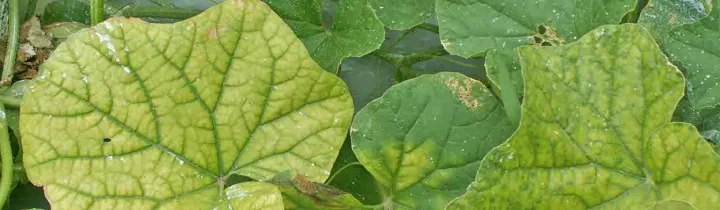
The primary symptom of infection by the orthotospovirus is the appearance of characteristic mosaic spots on the leaves. These spots often exhibit a yellowish or pale green coloration.
Affected plants show stunted growth and general suppression of vegetative mass. Internodes become shortened, giving the plant a dwarf or compressed appearance.
Fruits of cucurbit crops often show areas of chlorosis, severe deformation, or necrotic spots, making the produce unsuitable for commercial sale.
In advanced stages of the viral development, apical buds may die, and leaves start to yellow and curl, leading to a significant loss of productivity.
Symptoms can vary significantly depending on the specific crop variety, the age of the plant, and environmental conditions, complicating early visual diagnosis.
Pathogen
The causative agent is the Orthotospovirus cucurbichlorosis, a virus belonging to the Tospoviridae family. This pathogen is an obligate parasite.
The disease is classified as a systemic viral infection. The virus spreads rapidly through the plant's vascular system, penetrating all internal tissues.
The primary vectors of the infection in nature are thrips. During feeding, they transmit viral particles from infected plants to healthy ones.
The virus remains active within the body of the insect vector throughout its entire life cycle, which ensures long-term maintenance of infection reservoirs.
In addition to thrips, wild weeds can serve as reservoirs for the virus, allowing the pathogen to survive through the winter period.
Conditions for development
The development of the virus is favored by weather conditions that are optimal for the rapid reproduction and migration of the thrips vectors.
Warm and dry weather patterns act as ideal catalysts for infection outbreaks, as they stimulate the rapid population growth of pests in fields and greenhouses.
The lack of proper crop rotation and the presence of infected weeds around the field significantly increase the risk of the virus spreading across the entire plot.
Insufficient phytosanitary cleaning of tools and greenhouse structures can also lead to the transmission of viral particles between plants.
High planting density promotes easier contact between plants and facilitates the movement of thrips, which accelerates the spread of the epiphytotic.
Why it matters
The main danger of this disease lies in the severe reduction of fruit quality, as produce loses its commercial appeal and organoleptic properties.
The virus causes systemic damage, leading to a sharp decline in photosynthetic leaf activity, which results in a critical shortfall in total yield.
If seedlings are infected at an early stage, the plant may die completely before forming fruits, resulting in a total loss of the harvest on affected plots.
Infected plants become extremely vulnerable to secondary infections, such as bacterial rots, which enter through damaged plant tissues.
The lack of effective curative treatments for plant viral diseases makes managing this pathogen an economically challenging task for farmers.
Protection
The primary method of control is the elimination of the primary vectors, thrips. This involves regular applications of broad-spectrum insecticides.
Continuous monitoring of crop health is essential. All plants showing signs of chlorosis should be removed immediately to prevent further transmission of the pathogen.
An important preventive measure is weed control in and around the fields, as these plants serve as virus reservoirs during the off-season.
- Use only certified, virus-free seed and planting material.
- Maintain spatial isolation between new plantings and areas with known infection history.
- Regular disinfection of tools and machinery that come into contact with plants.
Adherence to best agricultural practices, including proper crop rotation and optimal planting dates, helps minimize plant contact with thrips populations.
Discussion
No discussions yet — be the first.