
Cucumber golden mosaic
Aureusvirus cucumis
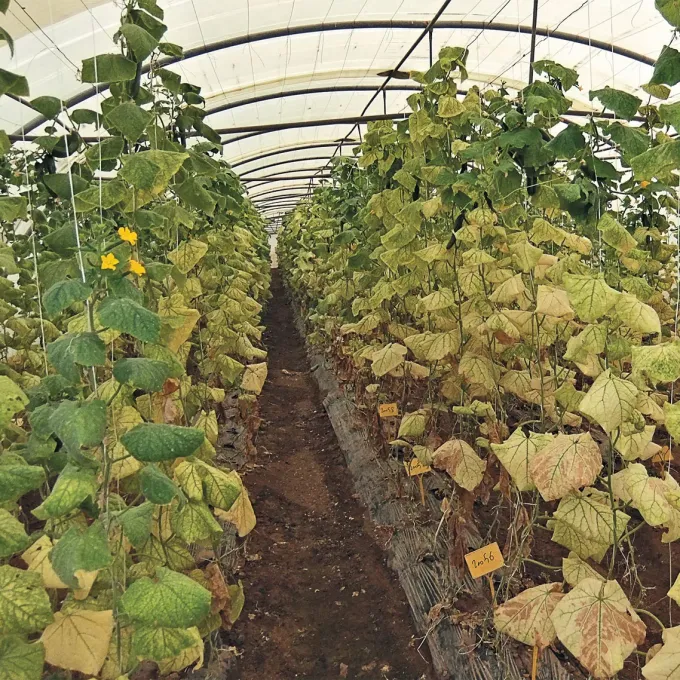
Description
Symptoms
The primary symptom is a distinct mosaic-like mottling on the leaves, featuring alternating patterns of bright yellow and green shades, often creating a golden appearance.
Leaves exhibit severe malformation, including crinkling, cupping, and a reduction in surface area, which significantly impacts the plant's energy production capacity.
Cucumber fruits produced by infected plants are frequently stunted, distorted, and develop yellow or green patches, rendering them unmarketable and poor in quality.
The overall growth of the plant is stunted, characterized by shortened internodes and a bushy, weak appearance that becomes more pronounced as the infection advances.
- Bright yellow mosaic patterning
- Deformed and curled leaf blades
- Stunted growth and short internodes
- Yellowed and distorted fruit surface
Pathogen
The pathogen responsible for this disease is the Cucumber golden mosaic virus (often linked to the Aureusvirus genus or related viral groups). It is a systemic obligate parasite that infects the vascular tissues of the host plant.
The virus particles interfere with the plant's metabolic pathways, specifically affecting protein synthesis and photosynthesis, which leads to the characteristic symptoms observed in infected tissues.
The virus is highly transmissible and can remain viable in host plant tissues, infected seeds, or plant debris, serving as a source of primary inoculum for subsequent seasons.
It behaves as a persistent or non-persistent pathogen depending on the vector, being efficiently moved throughout the plant's phloem once initial infection occurs.
Due to its viral nature, it cannot be controlled by antibiotics or fungicides, making management centered entirely on prevention and vector control.
Conditions for development
The spread of the disease is highly favored by warm temperatures and long days, which accelerate the life cycle of insect vectors like aphids and whiteflies.
Vectors play a crucial role in the dissemination of the virus, as they carry the pathogen from infected reservoir plants to healthy cucumber seedlings during feeding.
In greenhouse settings, human activity is a major factor; contaminated pruning tools, gloves, and clothing can easily transfer the virus between healthy plants.
High planting density in greenhouses facilitates leaf-to-leaf contact, allowing the virus to spread rapidly throughout the entire crop population if not managed correctly.
Excessive nitrogen fertilization promotes lush, succulent vegetative growth, which attracts insect pests and increases the susceptibility of the plants to viral colonization.
Why it matters
The economic impact of cucumber golden mosaic is severe, leading to significant yield losses and a total decline in the quality of the marketable harvest.
Photosynthetic efficiency drops drastically, preventing the plants from accumulating enough nutrients to develop healthy, high-quality fruits.
Infected crops suffer from compromised immunity, making them easier targets for secondary opportunistic pests and soil-borne pathogens, further accelerating crop decline.
The loss of fruit quality means that the produce is often unsuitable for fresh market or processing, resulting in direct financial loss for growers.
Because the virus persists in the environment, affected areas require rigorous sanitation, which increases operational costs for the agricultural producer.
Protection
The most effective strategy is the use of resistant or tolerant cucumber varieties that have been bred specifically to withstand viral pressure in the field.
Strict sanitation protocols must be implemented, including the immediate removal and destruction of symptomatic plants to eliminate the virus reservoir.
Integrated Pest Management (IPM) is essential to control insect vectors like whiteflies and aphids, which are the primary pathways for viral transmission.
Regular disinfection of all greenhouse surfaces, tools, and equipment is mandatory to prevent cross-contamination during daily horticultural operations.
Weed management around the perimeter of the crop is crucial, as many wild plants act as alternate hosts for the virus throughout the off-season.
Discussion
No discussions yet — be the first.