
Description
Symptoms
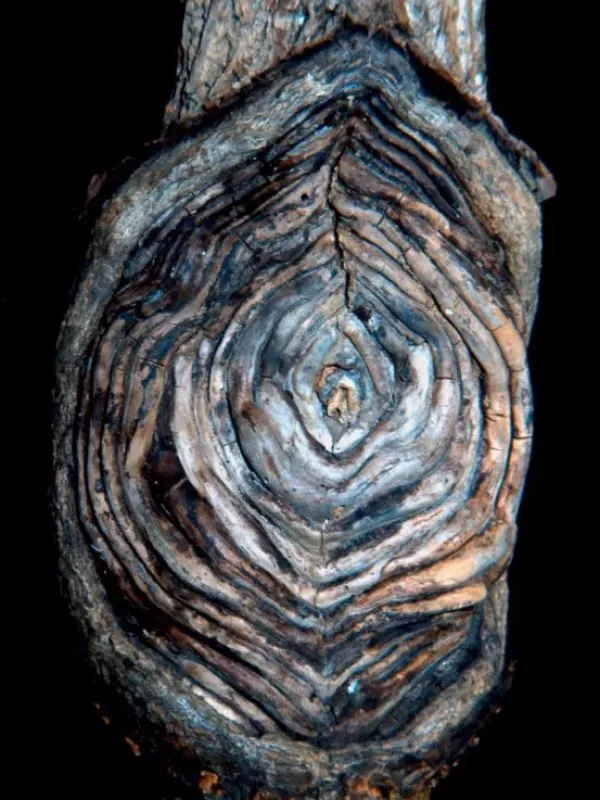
The hallmark of Eutypella canker is the appearance of distinct, sunken necrotic lesions on the trunk. These areas are often surrounded by a prominent, distorted callus layer as the tree attempts to wall off the fungus.
Small, black, disk-like or mound-shaped fruiting bodies (perithecia) can be observed on the surface of the dead bark. These are clear indicators of the active reproductive phase of the fungus.
The trunk often exhibits significant deformation or curvature in the vicinity of the canker. In many cases, the bark within the lesion splits, revealing the underlying decaying wood.
Crown symptoms include thinning, yellowing leaves, and premature leaf drop. As the tree’s water supply is interrupted by the girdling effect of the canker, the upper canopy begins to decline visibly.
Internally, the wood beneath the canker displays a characteristic brown or tan discoloration. This decay often extends deep into the heartwood, weakening the overall structural strength of the tree.
Pathogen
The disease is caused by the ascomycete fungus Eutypella parasitica, a destructive pathogen primarily targeting maple and sycamore trees. It is known to be a significant cause of trunk cankers in various forest stands.
The fungus develops its mycelium within the bark and sapwood of the host. As it colonizes the tissue, it disrupts the vascular system, preventing the movement of water and nutrients throughout the tree.
The life cycle involves the production of ascospores that are discharged during wet weather conditions. Wind and rain are the primary vectors responsible for transporting spores to new host trees.
Infection typically occurs through bark wounds, frost cracks, or broken branches. Once the fungal hyphae penetrate the protective layers of the trunk, they begin an aggressive colonization process.
The pathogen is known for its slow but persistent progression. It can remain active within the woody tissue for decades, gradually weakening the host until structural integrity is compromised.
Conditions for development
The development of the fungus is favored by dense stand conditions with high humidity and poor air circulation. These environments allow spores to land and germinate on the bark of susceptible trees.
Trees stressed by drought, soil compaction, or nutrient deficiencies are significantly more susceptible to infection. A weakened immune system limits the tree's ability to compartmentalize the fungal spread.
Temperature plays a crucial role in the development of fruiting bodies. Mild, moist spring and autumn weather provides the ideal window for spore release and successful colonization of new wounds.
Human activity, including improper pruning or mechanical injury from machinery, increases the likelihood of infection. Every exposed wood surface represents a potential entry point for Eutypella parasitica.
The presence of previously infected trees in the immediate vicinity creates a constant source of inoculum, increasing the risk for the entire stand or park area.
Why it matters
The primary concern regarding Eutypella canker is the long-term degradation of the timber quality. Trees affected by the disease are often prone to breakage at the site of the canker during windstorms.
The disease contributes to a steady decline in the health and vigor of the maple population. It can lead to the widespread loss of canopy trees, drastically altering the character of the landscape.
In nursery settings, this disease poses a severe threat, as it can kill young saplings before they reach maturity. This results in significant economic losses for commercial growers.
If left unmanaged, the canker acts as a persistent reservoir of infection. This necessitates costly removal operations and long-term monitoring of the surrounding ecosystem.
- Loss of timber value due to internal decay
- Increased risk of trunk failure and windthrow
- Negative impact on biodiversity in forest stands
- High maintenance costs for park and urban arboriculture
Protection
Strict sanitation measures are essential for managing Eutypella canker. Severely infected trees must be removed and destroyed to reduce the overall spore load in the area.
Preventing mechanical damage to trunks is a key preventative strategy. Any necessary pruning should be performed carefully, avoiding damage to the branch collar where natural defenses are strongest.
Promoting tree vigor through proper fertilization, watering, and soil management helps trees naturally resist the advancement of fungal infections.
Improving stand spacing to ensure adequate sunlight and airflow is crucial. This practice keeps the bark drier, making it more difficult for fungal spores to survive and germinate.
While chemical control is generally impractical for large-scale forest stands, fungicide treatments may be considered for high-value ornamental trees in urban landscapes to protect wounds and prevent infection.
Pathogens and affected parts
Affects crops · 1
Discussion
No discussions yet — be the first.