
Hypoxylon canker
Entoleuca mammata
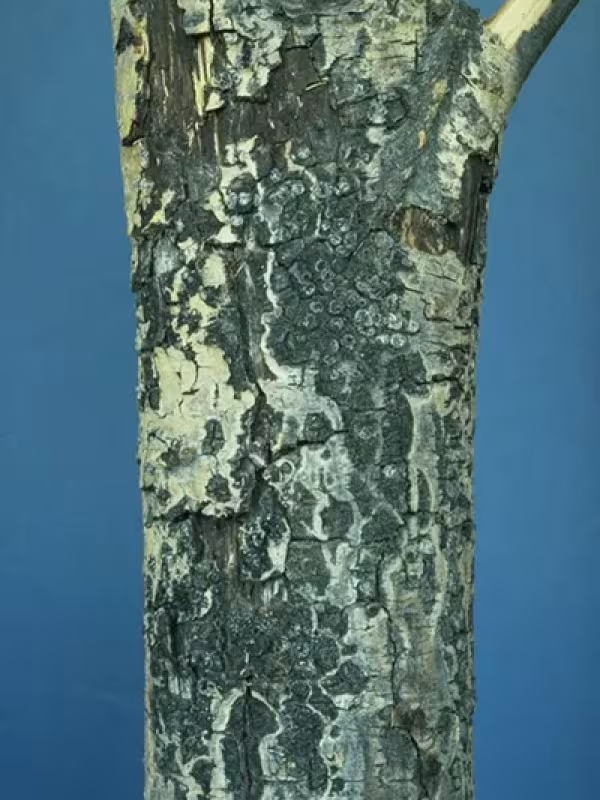
Description
Symptoms
Initial symptoms include the appearance of sunken or flattened areas on the bark. These spots often look darker and slightly oily compared to healthy bark.
As the infection progresses, the bark begins to crack, revealing the black, crust-like fungal stroma beneath or pushing through the surface.
The leaves above the cankered area often turn chlorotic or wilt prematurely, serving as an early indicator of severe vascular obstruction in the tree.
Cankers often girdle the stem, causing the entire section of the tree above the infection to die. In many cases, the weakened wood snaps at the site of the canker.
- Sunken or discolored bark patches.
- Black, eruptive fungal stromata.
- Cracking and peeling bark.
- Premature leaf yellowing and crown dieback.
- Brittle stem susceptible to wind breakage.
Pathogen
The disease is caused by the ascomycete fungus Entoleuca mammata, which is a serious pathogen primarily affecting aspen and poplar species.
The fungus invades the tree through bark injuries, leaf scars, or insect damage. Once inside, it develops a mycelium that spreads rapidly through the cambium and inner bark tissues.
As it colonizes the host, the pathogen produces black, eruptive stroma through the bark. These structures house spores which are the primary means of dispersal for the fungus.
The fungus is highly aggressive, capable of killing a healthy-looking tree within a few years by effectively girdling the stem and disrupting nutrient flow.
The infection remains active throughout the year, with spore production occurring during periods of high humidity and moderate temperatures.
Conditions for development
Entoleuca mammata thrives in environments with high moisture levels, which are critical for the successful germination of fungal spores on the host surface.
Trees stressed by drought, overcrowding, or competition for sunlight are significantly more susceptible to infection than those in optimal growing conditions.
Mechanical damage from wildlife or human activity creates entry points for the pathogen, allowing it to bypass the tree's natural bark defenses.
Poor forest management, such as the failure to remove infected debris, maintains a high level of inoculum in the environment, facilitating the spread of the disease.
The disease tends to be more prevalent in younger, fast-growing stands where the bark is thinner and more easily penetrated by the fungal hyphae.
Why it matters
Hypoxylon canker is a major cause of mortality in aspen and poplar stands, leading to significant timber losses and economic impact on the forestry sector.
Beyond direct tree mortality, the disease reduces the overall health and vigor of the forest, making it more susceptible to secondary pests and pathogens.
The presence of the disease in urban and recreational areas poses a safety risk, as brittle, infected trees are prone to unexpected failure and falling.
Infected wood undergoes rapid decay, rendering it useless for most commercial applications, which limits salvage logging options for foresters.
The cumulative effect of this disease can alter forest composition, as susceptible species are gradually replaced by more resistant, though perhaps less desirable, vegetation.
Protection
Sanitation is the most effective control strategy: identifying and removing infected trees from the stand is essential to reduce the local spore load.
Promoting forest health through proper thinning and site selection helps minimize tree stress, thereby increasing the stand's natural resistance to the pathogen.
Avoiding unnecessary wounding of trees during forest operations is crucial, as every bark injury represents a potential infection site for the fungus.
In reforestation efforts, selecting resistant clones or planting non-susceptible species in high-risk areas is the most sustainable long-term management approach.
Monitoring programs should be implemented to detect outbreaks early, allowing for rapid removal of infected trees before the disease spreads to the broader forest community.
Discussion
No discussions yet — be the first.