
Description
Symptoms
The primary symptom is the development of localized, sunken cankers on branches or trunks. These lesions often show a distinct reddish-orange or brown discoloration of the affected bark.
Bark cracking is common as the tissue dies and the tree attempts to compartmentalize the infection. Callus tissue often forms around the edges of the canker, attempting to seal off the fungal advance.
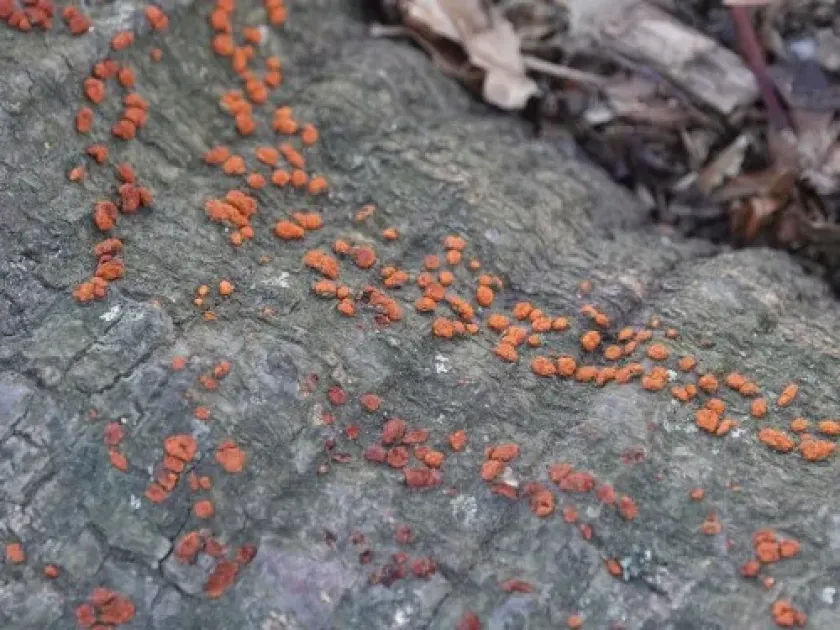
During humid weather, small, orange or reddish-brown pimple-like bumps appear on the bark surface. These are the spore-bearing bodies (stromata) of the fungus, confirming an active infection.
Dieback of branches above the infection site is a classic sign of vascular disruption. If a canker forms a complete ring around the trunk (girdling), the entire part of the tree above the lesion will die.
Cross-sectional inspection of a severely infected branch often reveals deep, dark-colored necrosis penetrating into the sapwood, confirming that the fungus has reached beyond the bark.
Pathogen
The causal agent of this disease is the fungus Endothia gyrosa (synonym Cryphonectria gyrosa), an ascomycete fungus. It is a persistent pathogen capable of invading the bark and cambium layers of woody plants.
The pathogen functions as a wound parasite, meaning it exploits damaged tissue to establish its mycelium. Once inside, it spreads laterally and vertically, disrupting the tree's vascular transport.
The life cycle includes the production of asexual conidia and sexual ascospores. These are released from fruiting structures known as stromata, which develop within the host's bark.
Dissemination primarily occurs via wind-borne spores and rain splash, especially in humid environments. The fungus is highly adapted to survive in bark debris, making it a persistent threat in nurseries.
Liquidambar styraciflua (American sweetgum) is a primary host for this fungus, although it can infect various other broad-leaved tree species depending on environmental stress levels.
Conditions for development
Environmental stress is the most significant factor predisposing trees to Endothia gyrosa. Drought, waterlogging, or severe temperature fluctuations weaken the tree's immune response.
High humidity and moderate temperatures provide the perfect conditions for spore germination. Moisture on the bark allows spores to move into fissures or wounds more effectively.
Mechanical damage caused by pruning, storms, or maintenance equipment creates entry points for the pathogen. Failure to seal these wounds increases the risk of infection significantly.
Poor site management, such as overcrowding or improper planting depth, leads to suppressed growth. Suppressed trees are less able to produce sufficient chemical defenses against fungal pathogens.
Inadequate airflow within dense plantings contributes to the disease cycle by keeping the bark surfaces wet for longer periods, facilitating the colonization of the fungus.
Why it matters
Endothia canker significantly compromises the structural integrity and aesthetic value of ornamental trees. It is particularly damaging to landscaping projects where specific trees are prized for their form.
The disease causes a gradual decline in tree health. As the vascular system becomes compromised, the foliage may wilt, turn yellow, and drop prematurely, leading to severe crown thinning.
Long-term infections lead to the loss of large branches, which may necessitate the removal of the entire tree to prevent the spread of the pathogen to neighboring specimens.
Infected trees often become attractive to wood-boring insects, which can further aggravate the decline. These secondary pests speed up the mortality rate of the weakened tree.
The economic burden of this disease is high, involving costs related to tree removal, disposal of infected material, and the long-term monitoring of nearby healthy plants.
Protection
Sanitation is the most critical management strategy. Infected branches must be pruned immediately and removed from the site to lower the overall spore load in the area.
Disinfecting pruning tools between cuts is mandatory. A 70% alcohol solution or a bleach solution effectively kills spores, preventing the transfer of the fungus to healthy wood.
Wound protection using horticultural sealants or fungicides is recommended when pruning in susceptible species. This prevents spores from colonizing fresh cuts during the healing process.
Preventive application of copper-based fungicides can help suppress fungal growth on the bark surface, particularly during periods of high risk or after severe weather events.
Promoting overall tree vigor through proper irrigation, mulching, and balanced fertilization remains the best long-term defense. Healthy trees are significantly more resistant to canker fungi.
Pathogens and affected parts
Affects crops · 1
Discussion
No discussions yet — be the first.