
Description
Symptoms
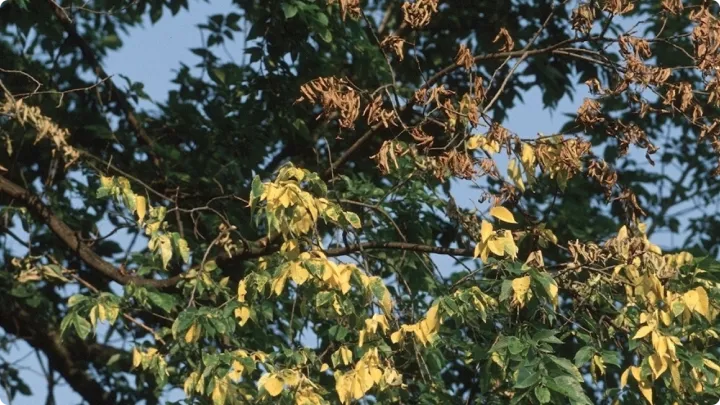
Initial symptoms include the premature yellowing and wilting of leaves on individual branches, often misidentified as drought stress symptoms.
Necrotic lesions or cankers appear on the bark of infected branches, which eventually darken and become sunken, potentially girdling the stem.
A closer inspection of the bark reveals tiny black pustules, known as pycnidia, which release spores during periods of high humidity.
Tissues beneath the necrotic bark lesions typically show brown to dark-brown discoloration, indicating the deep penetration of the fungal infection.
Over time, the infection progresses toward the crown, resulting in branch dieback and eventually the decline or death of the entire tree.
Pathogen
The disease is caused by the fungus Dothiorella ulmi (synonym Sphaeropsis ulmicola), which belongs to the class of deuteromycetes.
This pathogen specifically targets woody plants of the Ulmaceae family, with various species of elms (Ulmus spp.) being the primary hosts.
The fungus acts as a parasite, invading the host tissues through wounds, bark cracks, or the junctions where leaf petioles attach to the branches.
The development of the pathogen is closely associated with physiological stress in the tree, often triggered by environmental factors or insect infestation.
Once established, the fungal mycelium grows within the phloem and cambium, disrupting the vascular flow and causing systemic damage to the tree.
Conditions for development
Favorable conditions for the disease include high humidity and moderate temperatures, which accelerate spore germination and fungal growth.
Trees weakened by adverse urban conditions, such as poor soil aeration or proximity to pollutants, are significantly more susceptible to infection.
Dissemination of conidia occurs primarily through rain splashes, wind currents, and insect vectors that move across the tree bark.
Any existing mechanical injuries, including frost cracks or improper pruning cuts, provide entry points for the fungal spores to colonize the host.
Extended wet seasons often lead to rapid outbreaks, spreading the infection across vulnerable elm populations in parks and woodlands.
Why it matters
The disease causes extensive damage to landscape elms and forest stands, leading to poor canopy structure and aesthetic decline.
Severely infected trees become highly vulnerable to secondary pests and pathogens, accelerating their overall deterioration and mortality.
In nursery settings, Dothiorella wilt can cause high rates of seedling loss, resulting in significant economic consequences for growers.
Management of the disease in urban areas necessitates expensive sanitation measures and the removal of hazardous, dying trees.
The overall ecological value of the stands is reduced as the continuous dieback compromises the stability and longevity of the elm population.
Protection
Effective management requires a combination of good silvicultural practices and proactive monitoring of tree health in the affected areas.
Sanitary pruning is essential; infected branches must be removed, cutting well into the healthy tissue and sterilizing tools between cuts.
- Prompt removal and disposal of all infected wood and debris.
- Application of fungicidal treatments during the active growing season.
- Protection of the trunk and branches from mechanical and frost damage.
- Improving tree vigor through proper irrigation and balanced fertilization.
- Selecting resistant elm cultivars for new planting projects.
Regular inspections allow for the early detection of the pathogen, which is crucial for preventing the infection from spreading to healthy trees.
By minimizing stress factors and maintaining high plant hygiene, it is possible to mitigate the impact of this destructive fungal disease.
Pathogens and affected parts
Affects crops · 1
Discussion
No discussions yet — be the first.