
Description
Symptoms
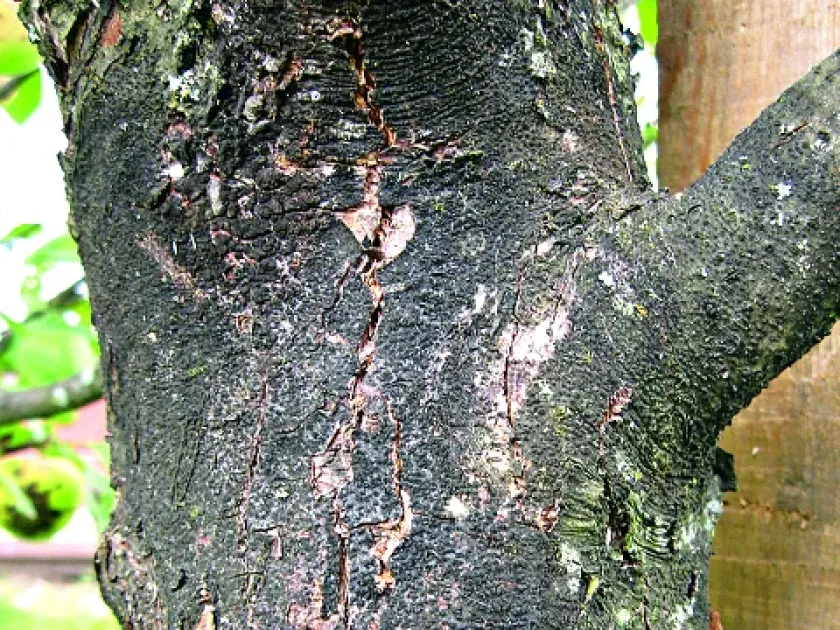
Common hosts for this pathogen include the domestic apple (Malus domestica) and the common pear (Pyrus communis). The disease presents as localized bark necrosis, which expands over time to girdle branches or the main trunk.
Infected areas typically show brown or dark discoloration, with the bark often cracking and peeling away. Close inspection reveals small, black, pinhead-sized structures called pycnidia, which serve as the fungal reproductive organs.
When branches are girdled, foliage may wilt and die prematurely, often remaining attached to the tree. Fruits on affected trees frequently develop rot, manifesting as expanding circular lesions with concentric zones.
Early symptoms are often subtle, hidden beneath the outer bark layers. Detection frequently occurs only after the formation of significant cankers or the total dieback of affected tissues.
Botryosphaeria canker is often accompanied by secondary opportunistic infections, making accurate field diagnosis challenging. A key characteristic is the pathogen's ability to remain viable for many years.
Pathogen
The causal agent of this disease is the fungus Botryosphaeria stevensii, which belongs to the class of Ascomycetes. In its life cycle, the anamorph stage, formerly known as Diplodia mutila, plays a significant role in propagation.
The fungus acts primarily as a saprotroph or a weak parasite, colonizing stressed tissues of woody plants. It can persist for long periods in infected bark, plant debris, and mummified fruits within the orchard environment.
Infection spreads via conidia released from pycnidia as viscous masses during periods of high humidity. Spore dispersal is facilitated by wind currents, rain splash, insects, and contaminated pruning tools.
The pathogen enters the plant through wounds, frost cracks, sunburn lesions, or improper pruning cuts. The mycelium gradually colonizes the cambium and underlying wood, disrupting essential plant transport systems.
Disease progression is closely linked to the physiological health of the tree. Resistant trees possess stronger structural barriers that prevent the hyphae from penetrating deep into the internal tissues.
Conditions for development
High humidity and moderate temperatures are the most critical factors for pathogen development. The infection process is most active during extended periods of rain, especially when interspersed with temperature fluctuations.
Tissue damage caused by extreme weather, such as winter frost cracks or summer sunburn, provides ideal entry points for the fungal mycelium. Vulnerability increases significantly in stressed or weakened orchards.
Poor orchard management practices, such as lack of irrigation or improper fertilization, reduce the tree's natural resistance to Botryosphaeria stevensii. Overcrowded plantings further exacerbate conditions by reducing airflow.
The optimal temperature range for mycelial growth is between +20°C and +28°C. However, the pathogen remains active across a broader range, allowing infection to proceed throughout the entire growing season.
Neglected orchards containing excessive amounts of deadwood serve as permanent reservoirs of infection. Unremoved pruning waste under the canopy creates a high-pressure environment for spores.
Why it matters
The primary damage caused by Botryosphaeria canker is the progressive dieback of branches, which leads to a significant loss of tree productivity. Severe cases may result in the total death of the tree over several seasons.
The disease negatively impacts fruit quality, triggering decay both on the tree and during post-harvest storage. This leads to substantial economic losses for commercial fruit growers.
Damage to the xylem and phloem disrupts the circulation of sap, leading to the overall physiological decline of the host tree. Weakened trees become more susceptible to other pests and opportunistic pathogens.
The disease is difficult to eradicate once it penetrates deep into the woody tissue. Often, the only viable option is the removal of large branches or the entire skeleton of the tree, which destroys the canopy structure.
Extensive outbreak sites can lead to the loss of entire plantings, requiring labor-intensive and costly remediation measures within the orchard.
Protection
The cornerstone of protection is timely sanitary pruning and the removal of infected branches, ensuring cuts are made well into healthy tissue. All pruning tools must be disinfected, and wound surfaces should be sealed with protective paint.
Maintaining optimal agricultural practices, including balanced fertilization and proper hydration, is essential to bolster the tree's natural immunity. Painting trunks can help prevent sunburn damage.
Preventive fungicide spraying is recommended during periods conducive to infection. Copper-based compounds and systemic fungicides are effective when applied at the correct stages of tree development.
- Regular disinfection of all gardening and pruning equipment.
- Systematic collection and destruction of fallen fruit and leaves.
- Protection of trunks against rodent damage and environmental stress.
- Continuous monitoring of bark condition throughout the season.
Early detection through regular orchard inspections allows for surgical removal of small cankers, preventing further spread. A systemic, year-round approach to orchard hygiene is the best strategy for maintaining long-term yields.
Pathogens and affected parts
Affects crops · 2
Discussion
No discussions yet — be the first.