
Description
Symptoms
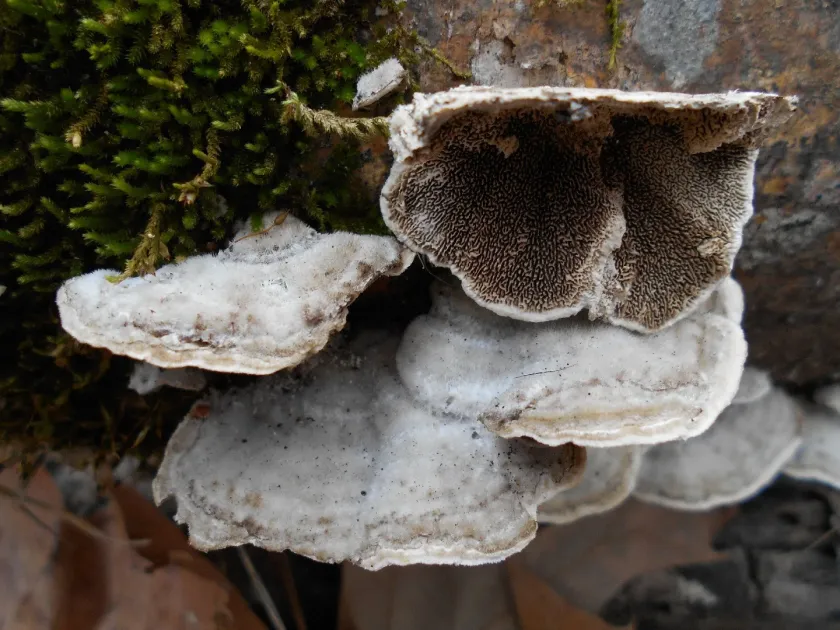
The most visible sign of infection is the emergence of bracket-like fruiting bodies on tree trunks, old stumps, or major branches. They typically appear in dense, overlapping clusters.
The wood affected by white rot shows distinct color and texture changes. In initial stages, it appears bleached; eventually, it becomes brittle, stringy, and fragile, which significantly increases the risk of tree failure during storms.
Cracks and necrotic patches often appear on the bark near the infection site. As the inner wood decays, trees exhibit symptoms like premature leaf drop, dieback of individual branches, or progressive thinning of the overall canopy.
The internal extent of the damage can be identified by the presence of dark, irregular lines within the wood grain, known as zone lines, which demarcate areas colonized by the fungus.
Advanced stages of the disease manifest as large hollows or cavities within the trunk. These areas, filled with decayed wood, indicate that the pathogen has been active for several years, severely compromising the tree's stability.
Pathogen
The disease is caused by the wood-decay fungus Cerrena unicolor, which belongs to the Basidiomycota division. It is primarily a saprotrophic organism that can become an opportunistic pathogen when trees are weakened by environmental or physiological stress.
This fungus causes white rot in wood by degrading both lignin and cellulose. The fungal mycelium penetrates deep into the tree's tissues, gradually decomposing healthy wood into a soft, fibrous mass that loses its structural integrity.
The fruiting bodies of this fungus are characteristically arranged in overlapping, shelf-like structures. The upper surface is covered in dense hairs, while the underside features a conspicuous, irregular pore surface, which serves as a key diagnostic feature.
Infection spreads primarily through basidiospores dispersed by air currents. Transmission can also occur via mycelial contact when healthy tree tissues come into direct contact with infected wood or infested soil particles.
This pathogen affects a wide variety of hardwood species. It is frequently reported on Liquidambar (sweetgum), birch, alder, ash, and various other deciduous trees found in urban landscapes and forests.
Conditions for development
Cerrena unicolor thrives where trees have sustained injuries, such as frost cracks, bark wounds, or insect damage. Because it is a secondary pathogen, it easily colonizes trees with compromised immune defenses.
Optimal development of the fungus requires high levels of ambient humidity and moderate temperatures. Poor aeration in the canopy or waterlogged soil around the root zone accelerates the rotting process.
Trees subjected to chronic stress—such as air pollution, soil compaction, or nutrient deficiencies—are highly susceptible to infection and provide ideal entry points for fungal spores.
Poor horticultural practices, specifically improper pruning that leaves large, unprotected wounds, represent a critical risk factor. Spores can rapidly colonize these exposed areas if left untreated.
Seasonal dynamics are also significant; the fungus exhibits peak sporulation during the spring and autumn months, taking advantage of the mild weather conditions to colonize new substrates.
Why it matters
The primary impact of the disease is a drastic reduction in the tree's overall vitality. By damaging internal tissues, the fungus disrupts the transport of water and nutrients, leading to stunted growth and decline.
The pathogen poses a severe safety hazard in public or urban areas. Because the rot weakens the trunk's core, infected trees are prone to structural failure and can fall without warning, even during light wind events.
Infected trees suffer significant loss of ornamental value. Species like Liquidambar show clear signs of deterioration, including sparse foliage and dieback, which detracts from their landscape appeal.
In silvicultural or commercial wood production, this fungus causes substantial economic losses by ruining timber quality and rendering logs unsuitable for processing or construction.
Treatment becomes increasingly difficult as the rot progresses deeper into the wood. Often, an infected tree must be removed to prevent it from becoming a reservoir of spores for surrounding healthy trees.
Protection
Effective management begins with proactive care. Maintaining tree health through consistent irrigation, proper fertilization, and pest management helps the tree build natural defenses against fungal colonization.
All mechanical damage to the trunk or branches must be mitigated immediately. Wounds should be cleaned to remove damaged tissue and treated with appropriate wound dressings or fungicidal agents.
Pruning must be performed using sterilized tools to prevent cross-contamination. Cuts should be executed correctly to promote rapid callus formation, leaving no stubs that could act as entry points for spores.
Sanitary pruning and tree removal are essential components of an integrated disease management strategy. Eliminating dead or diseased wood removes the primary inoculum source from the area.
When fruiting bodies are spotted, they should be carefully removed along with a portion of the underlying bark and disposed of by burning. This reduces the spore load, although it does not eradicate the internal mycelium.
Pathogens and affected parts
Affects crops · 1
Discussion
No discussions yet — be the first.