
Description
Symptoms
The first symptoms typically appear in early spring, soon after removing winter protection from the rose bushes.
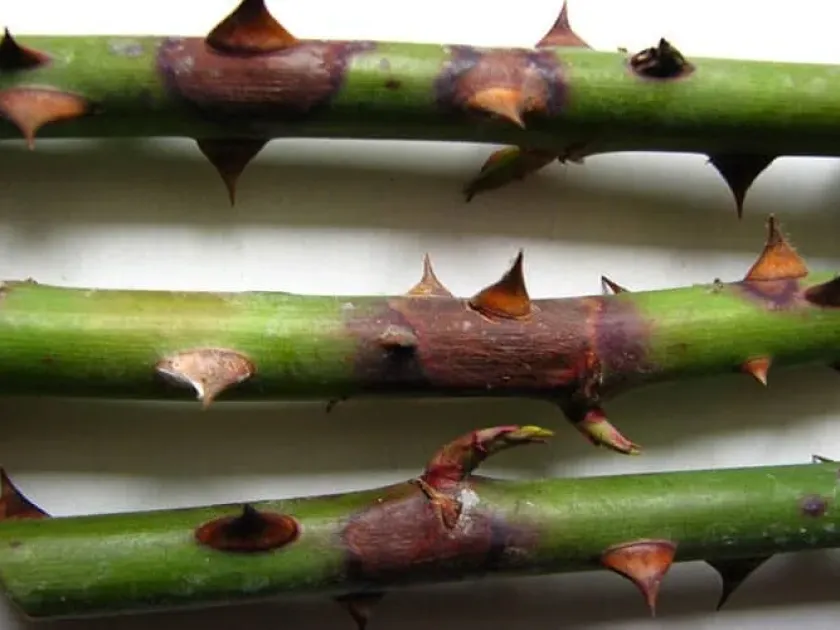
Infected canes display reddish-brown lesions that eventually turn into depressed, grayish-brown necrotic patches.
A distinct, vivid reddish-purple border is usually visible around the margin of the lesion, separating the diseased tissue from healthy areas.
Under humid conditions, small black fungal fruiting bodies, called pycnidia, emerge on the surface of the canker.
The canker eventually encircles the stem, cutting off nutrient flow and causing the death of the section of the cane above the lesion.
Pathogen
The causative agent of this disease is the fungus Coniothyrium wernsdorffiae, which is a specific pathogen affecting rose bushes.
This fungus is a member of the Coelomycetes group and primarily attacks the woody parts of the plant, including stems and branches.
The pathogen survives in dormant state within infected plant tissues, overwintering on the canes until favorable conditions emerge.
Infection spreads through asexual spores, known as conidia, which are easily disseminated by wind, rain, and pruning tools.
The mycelium colonizes the cortex and cambium layers, systematically destroying the plant's vascular tissue as it advances.
Conditions for development
The disease thrives in high humidity, especially during mild, damp winters or late autumn periods with poor ventilation.
Winter coverings that retain excessive moisture around the stems create a microclimate ideal for rapid fungal growth.
Plants that are physiologically weakened due to over-fertilization with nitrogen lack proper hardening, making them susceptible to infection.
Mechanical damage caused by thorns or improper pruning provides easy access points for the fungus to infiltrate the stem tissues.
Fluctuating temperatures around the freezing point can trigger the reactivation of the fungus even during the dormant season.
Why it matters
Cane canker is highly destructive and can lead to the rapid decline of entire rose bushes if left unchecked.
The blockage of vascular tissue causes chlorosis, wilting, and subsequent death of the affected branches during the growing season.
The disease reduces the overall plant vigor, leaving the roses more susceptible to other secondary infections and pest infestations.
If the infection reaches the base or the rootstock of the plant, the entire shrub may succumb to the pathogen.
Significant economic loss or damage to decorative collections occurs when the disease is allowed to spread unchecked throughout a garden.
Protection
Preventive care is the primary strategy, which includes maintaining good airflow and avoiding winter damage to the canes.
Pruning should be done using sterile tools, disinfecting the blades with alcohol or disinfectant solutions between individual plants.
All infected canes must be pruned back to healthy wood and immediately removed or burned to prevent further spore dispersal.
Applying copper-based fungicides during the dormant season and early spring helps to protect the canes from new infections.
Balanced fertilization focusing on potassium and phosphorus helps ensure the rose wood matures properly before winter, increasing resistance.
Pathogens and affected parts
Affects crops · 1
Discussion
No discussions yet — be the first.