
Description
Symptoms
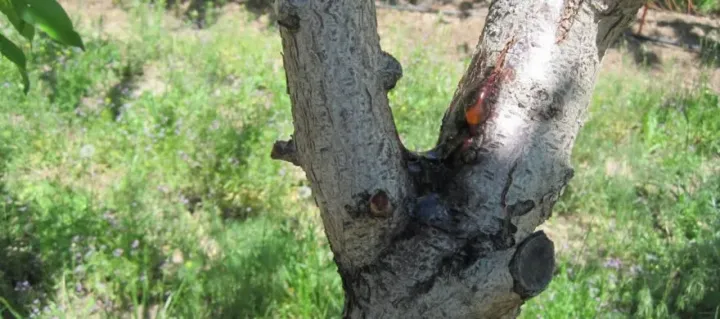
The first and most noticeable symptom is the formation of specific cankers on branches and stems of infected trees.
In affected areas, the bark begins to crack, exposing the wood and leading to tissue decay and necrosis.
Around the necrotic zones, significant tissue swelling is often observed as the tree attempts to wall off the infection.
Upon close inspection, small black spots—pycnidia of the fungus—can be seen on the bark, where spores mature.
In advanced cases, the disease leads to branch dieback, yellowing, and premature leaf drop, reducing tree vitality.
Pathogen
The pathogen responsible for this disease is the fungus Botryodiplodia hydrodermia, which belongs to the anamorphic fungi.
This pathogen specializes in attacking woody plants, entering tissues through mechanical wounds or bark fissures.
The fungus's life cycle is closely linked to the bark, where it feeds on living and dying tissues, gradually penetrating deeper.
Fungal spores can be spread by wind, rain, insects, or pruning tools, facilitating the spread of the infection.
The fungus remains active in the affected wood throughout the winter period, ensuring primary infection in the spring.
Conditions for development
Development of Botryodiplodia canker is favored by stressed trees due to environmental factors or poor maintenance.
High air humidity creates ideal conditions for spore germination and colonization on the tree's bark surface.
High summer temperatures accelerate mycelium growth within the tissues, speeding up cambium and bark necrosis.
Improper pruning and lack of disinfection of tools when working with infected trees increase the risk of spread.
Open wounds on the trunk, resulting from frost cracks or rodent damage, facilitate easier penetration by the pathogen.
Why it matters
The main damage is the disruption of sap flow, which leads to the gradual decline of the entire tree canopy.
Infection of the main trunk can cause total tree death if the fungus girdles the stem, interrupting nutrient transport.
The disease significantly lowers the tree's immunity, making it susceptible to secondary pests like wood-boring insects.
In urban landscapes, elm infection by this fungus leads to the degradation of green spaces and loss of ecosystem functions.
In nurseries, this disease can destroy a significant portion of young stock, causing serious economic losses.
Protection
The most important control measure is timely sanitary pruning of all infected branches, including surrounding healthy tissue.
All cuts and trunk wounds must be treated with appropriate fungicides, wound dressings, or disinfectants.
Adherence to proper cultural practices, including watering and fertilization, is essential to boost tree resistance.
In high-pressure areas, spraying with contact and systemic fungicides at the start of the growing season is recommended.
- Disinfect pruning tools between each tree.
- Remove and burn infected plant debris.
- Treat frost cracks and other bark injuries promptly.
Pathogens and affected parts
Affects crops · 1
Discussion
No discussions yet — be the first.