
Description
Symptoms
The primary symptom is the emergence of small pustules or bumps on the bark surface. As the fungus develops, these structures rupture the bark, creating a rough texture.
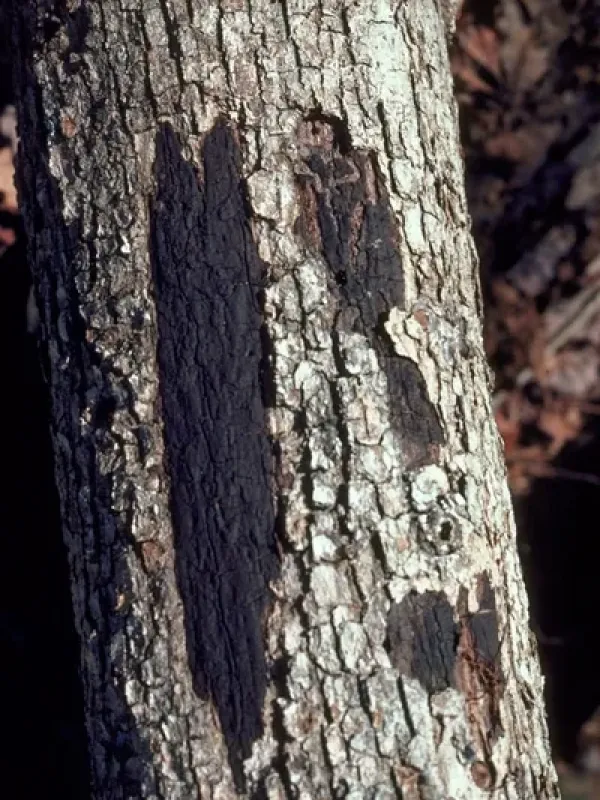
Infected areas often darken to a deep black color. The bark becomes brittle, dry, and may eventually slough off, revealing the internal fungal mycelium underneath.
Vascular system disruption occurs as the pathogen spreads laterally and vertically, leading to wilting leaves and stunted growth in affected branches.
On apple trees, the disease often starts near pruning cuts or frost cracks. Eventually, the affected branch or trunk shows characteristic black fungal fruiting bodies.
As the necrosis expands, the tree may show signs of severe decline, including canopy thinning and the eventual death of branches distal to the infection site.
Pathogen
The causal agent of this disease is the ascomycete fungus Biscogniauxia marginata. It is a specialized pathogen that primarily targets the bark and cambium of woody deciduous plants.
This fungus acts as a necrotrophic pathogen, actively colonizing host tissues and causing cell death. Over time, it can survive as a saprophyte on dead wood.
The fungus produces distinctive stroma that erupt through the bark surface. These structures are essential for the production and release of fungal spores into the environment.
The life cycle involves dormant phases within infected wood, allowing the pathogen to persist across seasons until conditions favor renewed growth.
Dissemination is facilitated by wind and splashing rain, which carry spores from infected sites to healthy bark, especially where natural or man-made openings exist.
Conditions for development
Disease progression is highly correlated with host stress factors, including prolonged drought, waterlogging, or severe winter injuries that weaken the tree.
High humidity and moderate temperatures provide the necessary moisture for spores to germinate and colonize the bark tissue effectively.
Mechanical injuries, such as poorly executed pruning cuts, insect damage, or sunscald, serve as primary infection courts for the pathogen.
Poor orchard sanitation, including the presence of dead wood and uncollected pruning debris, increases the inoculum pressure significantly.
Imbalanced nutrient availability, specifically an excess of nitrogen, can result in rapid but succulent bark growth that is more susceptible to fungal penetration.
Why it matters
Bark pustule necrosis causes severe damage to tree structural integrity, often leading to the girdling and death of infected branches or even the entire tree.
The economic impact is significant due to reduced fruit yield and quality, as the tree redirects energy from fruit production to dealing with the infection.
Infections reduce the lifespan of the orchard, necessitating premature removal and replacement of mature trees, which is a major long-term expense.
Once established, the disease can spread rapidly through an orchard if sanitation measures are neglected, creating a continuous cycle of infection.
The disease limits the recovery of the orchard, as remaining spores in the environment continue to threaten new plantings and healthy trees alike.
Protection
Sanitation is the most critical management practice. All infected branches must be pruned back to healthy wood and immediately removed from the orchard and destroyed.
- Disinfect all pruning tools with a 70% alcohol solution or bleach between cuts to prevent spreading the fungus.
- Seal major pruning wounds and damaged areas with professional wound paint or fungicides to protect exposed tissue.
- Apply copper-based fungicides in early spring to protect bark surfaces during the critical infection period.
- Maintain tree vigor through proper irrigation, balanced fertilization, and prevention of environmental stress.
- Regularly inspect the orchard for early signs of bark discoloration or pustule formation to allow for rapid intervention.
Pathogens and affected parts
Affects crops · 1
Discussion
No discussions yet — be the first.