
Aspergillus ochraceous
Aspergillus ochraceous
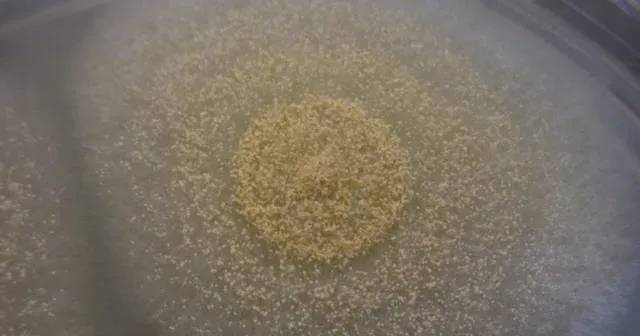
Description
How to identify
Aspergillus ochraceous belongs to the kingdom Fungi and the genus Aspergillus. It is a saprotrophic filamentous fungus, easily identified by its characteristic ochre or golden-yellow sporulation.
Microscopically, the organism is defined by globose conidial heads. The fungus exhibits high enzymatic activity, allowing it to colonize a wide range of organic substrates under favorable moisture conditions.
Systematically, this species is part of the Aspergillus ochraceus group, which includes closely related molds. The primary risk associated with this species is its ability to produce secondary metabolites, specifically ochratoxins.
In the natural environment, the fungus is ubiquitous in soil, on plant debris, and in the air. It acts as a facultative parasite that rapidly initiates active growth when storage conditions for agricultural products are compromised.
The fungus's growth is often accompanied by a distinct musty odor, serving as a key sensory indicator of substrate degradation and potential mycotoxin contamination in a batch of produce.
What it damages
The primary targets for infection include cereal grains, legumes, oilseeds, nuts, coffee beans, dried fruits, and animal feed. It is a significant concern for produce stored in warehouses and silos.
Damage to grain manifests as a decline in seed quality, loss of germination capacity, and altered chemical composition. Enzymatic degradation of proteins and starch renders the raw material unsuitable for food and feed processing.
The accumulation of Ochratoxin A poses a major threat. This highly toxic compound is heat-stable, meaning standard processing methods cannot eliminate it, creating serious food safety risks for consumers and livestock.
When seed is infected during pre-sowing treatment or in the soil, the fungus can cause damping-off and seedling mortality, leading to sparse crop stands and reduced field yields.
In storage, the fungus thrives in hotspots of self-heating grain. The hygroscopic nature of grain mass facilitates mycelial growth even when ambient humidity levels rise only slightly.
When it appears
The fungus remains active throughout the year under suitable conditions. However, the most severe outbreaks occur during post-harvest drying and throughout long-term storage if environmental controls fail.
The temperature optimum for Aspergillus ochraceous growth is between 25–30 degrees Celsius. It is a typical mesophile, capable of functioning efficiently across a broad temperature range.
Conidia are primarily dispersed by air currents and dust, which can carry them over long distances. Stored-product pests, such as insects and mites, also act as significant vectors for the spread of spores.
In field conditions, the development cycle is often linked to humid and warm weather during crop maturation. Delayed harvesting significantly increases the risk of initial seed contamination.
Warehouse seasonality is defined by grain inventory cycles. Improper ventilation and insulation create localized conditions that allow the fungus to develop even during colder months.
Signs of infestation
The first sign of infestation is the appearance of a yellow-ochre powdery coating on the substrate surface. Microscopic analysis confirms this as dense clusters of fungal conidiophores.
A second indicator is grain caking or clumping, caused by rapid mycelial growth. Producers often observe a discoloration of the kernels and the emergence of a characteristic musty or stale odor.
Severe infection leads to the breakdown of seed coats, making the grain brittle and dull. Visually, the surface appears matte and dusty, with visible evidence of spore production.
On food items like nuts or dried fruits, infestation manifests as expanding yellow spots. Internal tissue penetration may occur, which is often detected only upon cross-sectioning the infected material.
For accurate identification, laboratory techniques are employed, including culturing on selective media such as Czapek-Dox agar, where the fungus develops its signature colonial morphology.
Control measures
The cornerstone of control is maintaining the moisture content of the grain mass below critical levels (typically 12–14%). This effectively inhibits spore germination and mycelial expansion.
Strict temperature management during storage is essential. Active ventilation systems help remove excess heat and moisture, preventing the development of localized hotspots within the grain mass.
Before storage, produce must undergo rigorous cleaning and drying. Removing weed seeds and broken kernels is vital, as the fungus primarily attacks damaged or weakened grain tissues.
Preventative disinfection of storage facilities, equipment, and transport containers is mandatory. Fumigation and thorough sanitation help eliminate the background fungal load.
To prevent field-level development, crop rotation and timely harvesting are recommended. When risk levels are high, the use of fungicidal seed treatments provides an effective barrier against mold colonization.
Causes diseases · 1
Discussion
No discussions yet — be the first.