
Aspergillus wentii
Aspergillus wentii
Description
How to identify
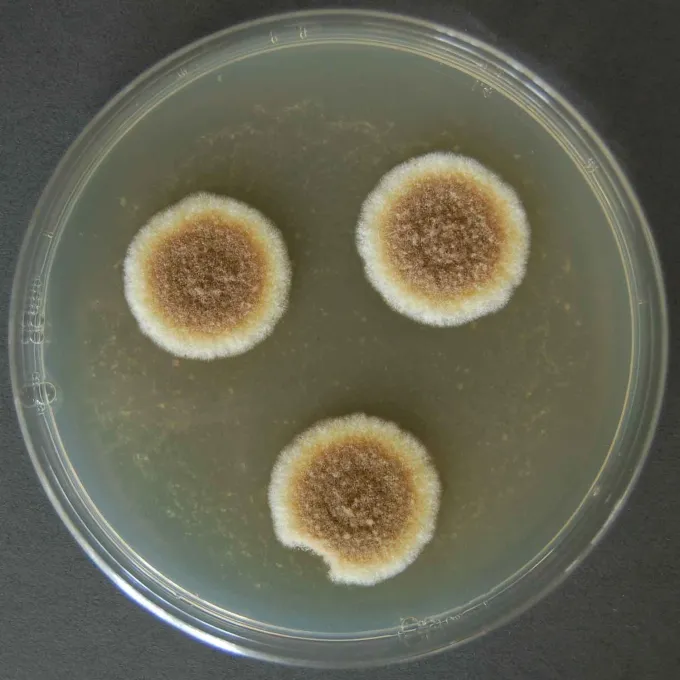
Aspergillus wentii is a microscopic mold fungus belonging to the kingdom Fungi, phylum Ascomycota, and genus Aspergillus. While primarily acting as a saprotroph, this pathogen can function as a facultative parasite under specific conditions, attacking various plant tissues.
The fungus develops mycelium rapidly, forming dense colonies with a characteristic yellow-brown to dark brown coloration. It reproduces through conidiophores that bear chains of spherical conidia, which are easily dispersed by air currents and mechanical disturbance.
This fungus is noted for its high metabolic activity, secreting various enzymes such as amylases and pectinases, which allow it to efficiently degrade organic plant matter. It is a common inhabitant of soil, decaying plant debris, and agricultural grain stores.
The systematic classification of the species is determined by its ability to thrive on diverse organic substrates high in carbohydrates. In agronomy, it is recognized as a significant component of the fungal flora contributing to post-harvest crop spoilage.
Biologically, the species is highly resilient to a wide range of temperatures, making it a persistent threat in agricultural storage facilities where microclimates often favor the unchecked proliferation of mold species.
What it damages
Aspergillus wentii most frequently infects seeds and grain crops, including rice, peanuts, soybeans, and corn. Damage typically occurs under field conditions during periods of excessive moisture or during improper post-harvest storage.
The fungus aggressively colonizes fruits and seeds, entering through micro-cracks or wounds caused by insect pests. It also spreads through organic refuse, establishing infection reservoirs that can migrate to healthy plant parts.
Beyond live crops, the pathogen severely impacts seed stock stored under poor conditions, often leading to a total loss of viability. Damage to the seed embryo renders the stock unsuitable for future planting.
The damage manifests as the destruction of starch and protein structures, which significantly lowers the nutritional and feed quality of the grain. Furthermore, the fungus may contaminate crops with mycotoxins, posing serious health risks to livestock and humans.
Contamination of sowing material is particularly hazardous, as it leads to poor germination and the development of seedling blight or root rot during early growth stages, ultimately reducing overall crop yields.
When it appears
Development is most intense during periods of high ambient and soil humidity. Fungal spore activation requires a relative environmental humidity of at least 75-80%.
Optimal temperatures for substrate colonization range from +25°C to +30°C. In hot and humid climates, the pathogen can spread through an entire grain mass within a storage bin in a relatively short period.
Under field conditions, the peak of spore dissemination occurs during prolonged rainy weather during the crop maturation phase. Agronomic errors, such as delays in harvesting, drastically increase the probability of field contamination.
Within warehouse settings, fungal development can occur year-round if temperature anomalies or roof leaks cause localized moisture buildup within the grain pile.
The biological cycle includes a dormant stage in the form of spores, which can remain viable in soil and plant residues for several years, waiting for favorable conditions to germinate.
Signs of infestation
The initial sign of infection is the emergence of a specific musty or moldy odor within stored produce or on standing crops. A yellowish or brownish coating becomes visible on the surface of grains or fruits.
When seeds are infected, their coats may darken; dissection often reveals a loose mass of fungal mycelium inside. Affected areas frequently exhibit a powdery consistency due to mass conidia production.
- Darkening of the surface of seeds and fruits.
- Presence of fuzzy brown mold on plant residues.
- Loss of seed viability during germination energy testing.
- Visible necrotic spots on the cotyledons of emerging seedlings.
Microscopic inspection reveals the characteristic Aspergillus conidial heads, which distinguish this species from other common molds. The heavy spore production gives the affected substrate a matte, dusty appearance.
In cases of seedling infection, plants show stunted growth, yellowing, and mortality before emergence from the soil. The root system of such seedlings is typically covered in dark mycelium and begins to decay rapidly.
Control measures
The primary control measure is the strict maintenance of moisture levels during grain storage. Grain must be dried to moisture levels below 14% before being placed into long-term storage.
Quality cleaning of grain to remove impurities and damaged kernels is essential, as these components often serve as the primary infection focus for Aspergillus wentii proliferation.
Regular disinfection of storage facilities, silos, and agricultural machinery using certified fungicidal agents and ozone treatment methods is highly recommended.
In field conditions, effective management involves controlling insect pests that compromise the integrity of fruits and seeds, as these wounds provide easy access for the pathogen to enter plant tissues.
The use of fungicides for seed treatment before sowing helps protect seedlings from soil-borne infection, ensuring uniform and healthy emergence even under suboptimal weather conditions.
Causes diseases · 1
Discussion
No discussions yet — be the first.