
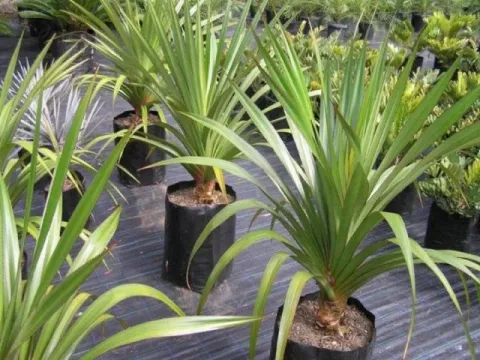
Pandanus sanderi
Pandanus sanderi
Pandanus sanderi, a member of the Pandanaceae family, is a striking ornamental plant valued for its long, variegated, sword-shaped leaves. Originating from the tropical regions of the Malay Archipelago, it thrives in warm and humid environments consistent with its native climate.
What the section contains
Pandanus sanderi
The cultivation of this plant requires a stable temperature range between 20°C and 25°C. Exposure to temperatures below 16°C can trigger stress and physiological damage, so it is essential to maintain a warm environment throughout the year, especially in indoor settings.
Lighting requirements are specific: Pandanus sanderi needs bright, filtered sunlight to maintain its vibrant yellow-green variegation. Direct sunlight is generally too harsh and may scorch the foliage, while insufficient light leads to faded colors and stunted leaf growth.
The soil should be a well-draining, nutrient-rich substrate, typically composed of peat, loam, and coarse sand. Proper drainage is the most critical factor in soil management, as the roots are highly susceptible to rot if allowed to sit in waterlogged conditions.
Maintaining high humidity levels is vital for the health of the plant. Regular misting of the leaves or using a pebble tray helps prevent the leaf tips from turning brown and dry, which is a common issue for this species in climate-controlled indoor environments.
The most common pests affecting this culture are spider mites and scale insects. These pests often congregate on the underside of the leaves or near the base, and regular monitoring combined with gentle wiping can prevent severe infestations.
Pathogenic threats include fungal root rot, usually caused by overwatering or poor drainage. Effective management relies on allowing the top layer of the soil to dry out between watering sessions and ensuring adequate aeration of the root system.