
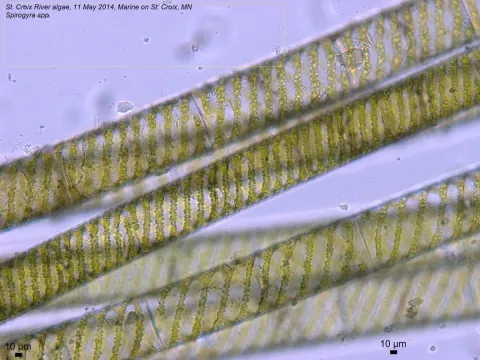
Spirogyra
Spirogyra
Spirogyra is a genus of filamentous charophyte algae belonging to the Zygnemataceae family. It is commonly found in freshwater habitats worldwide, where it forms dense, hair-like mats floating near the water surface.
What the section contains

Spirogyra
The growth of this culture is highly dependent on the availability of inorganic nutrients, specifically nitrates and phosphates. In aquaculture settings, maintaining a nutrient-rich environment is essential for achieving a high biomass yield.
Climatic requirements involve moderate temperatures, typically between 15°C and 25°C. The species thrives in environments with high light intensity, as its metabolic rate and reproductive capacity are directly linked to photon absorption.
The botanical structure is unique due to its ribbon-like spiral chloroplasts contained within the cells. This morphology allows for efficient photosynthesis, making it an attractive candidate for various industrial applications including biofuel production.
Cultivation protocols require precise management of water quality, including pH balance and dissolved gas saturation. Constant monitoring of carbon dioxide levels is vital to prevent the limitation of photosynthesis during peak growing stages.
Major threats to Spirogyra populations include parasitic fungal infections that target the filaments, leading to rapid biomass decay. Changes in water chemistry, such as the introduction of herbicides or heavy metals, are lethal to the culture.
Algal bloom competition from cyanobacteria or other phytoplankton can significantly restrict the available space and light for Spirogyra. Overstocking or poor water circulation can also cause localized oxygen depletion, negatively impacting growth.