
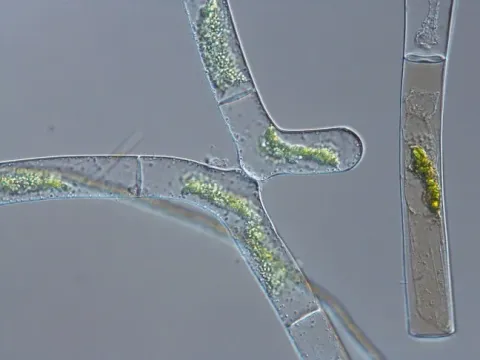
Mougeotia
Mougeotia
Mougeotia is a genus of filamentous green algae belonging to the family Zygnemataceae. While not a cultivated agricultural crop, it is a significant organism in freshwater ecology, often found in shallow ponds and slowly flowing bodies of water worldwide.
What the section contains
Mougeotia
The botanical structure consists of unbranched filaments composed of cylindrical cells. A distinguishing feature of the genus is its single plate-like chloroplast, which can rotate within the cell to orient itself optimally toward available light, a mechanism known as chloroplast movement.
These algae grow in diverse climates, favoring clear and nutrient-moderated environments. They are often found forming dense, bright green mats in stationary water, serving as a primary producer and habitat for microscopic aquatic organisms.
The environmental requirements include adequate sunlight and stable water chemistry. As a biological indicator, the presence of Mougeotia suggests a balanced ecosystem, as the species is sensitive to high levels of organic pollution and rapid eutrophication.
Reproduction occurs through both vegetative fragmentation of the filaments and sexual reproduction via conjugation. During this process, two filaments align, creating a bridge that allows genetic exchange, resulting in the formation of resistant zygotes capable of surviving harsh conditions.
The primary threats to Mougeotia populations include anthropogenic water pollution, specifically the runoff of nitrogen and phosphorus from agricultural fields. This excess nutrients triggers competing algal blooms that suffocate the native flora.
Various fungal pathogens are known to infect filamentous algae, causing cell wall degradation and eventual filament decay. These diseases can rapidly decimate large mats of algae in stagnant water conditions.
Herbivory by zooplankton and small aquatic invertebrates plays a regulatory role in controlling populations. High densities of grazers can significantly reduce the biomass of these algal colonies within a habitat.
Chemical contamination, particularly the introduction of herbicides into drainage systems, proves highly toxic to Mougeotia, disrupting the photosynthetic machinery essential for their survival.
Environmental instability, such as drought or the total draining of ponds and irrigation ditches, represents a major physical threat, limiting the geographical spread and seasonal longevity of the species.