
Thick spirogyra
Spirogyra crassa
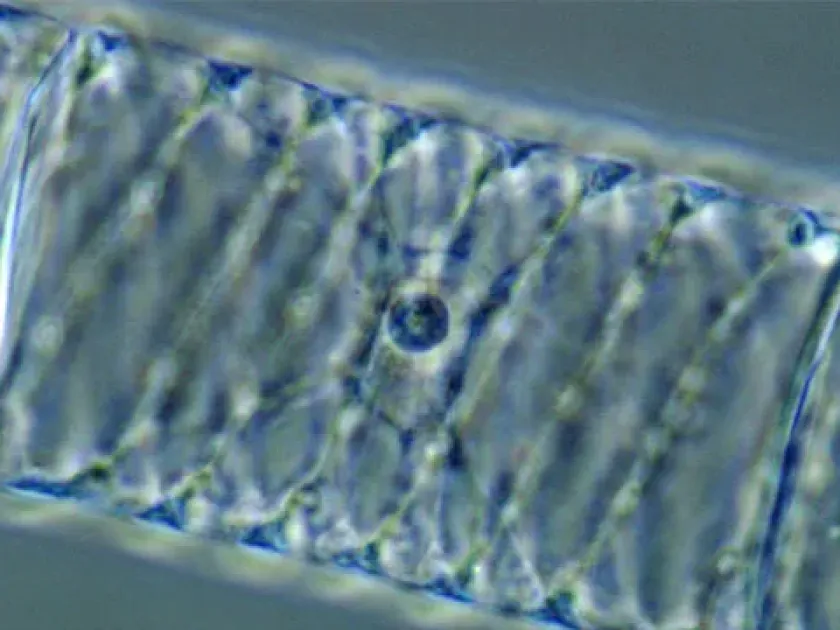
Description
Sowing dates
Thick spirogyra is not a traditional sown crop; its "sowing" process involves inoculating mother material into an aquatic environment. The optimal time for initiating cultivation is during the spring and summer months when natural light levels peak, providing the energy required for rapid metabolism and growth.
To accelerate the start of the growth phase, the starter culture is pre-adapted in laboratory conditions by gradually increasing light intensity. Once sufficient biomass is achieved, the substrate is transferred to large ponds or bioreactors, maintaining a constant water temperature between 20–25 degrees Celsius.
Establishing the correct population density is crucial as it directly affects the colonization rate of the water surface. Excessive initial density can lead to a shortage of dissolved carbon dioxide; therefore, ensuring even distribution of the filaments throughout the reservoir volume is essential for success.
Reproduction of Spirogyra crassa under cultivation conditions occurs primarily through vegetative fragmentation. Each individual cell has the potential to divide, allowing for rapid colonization of large water areas provided that temperature and nutrient conditions remain within the target range.
For stable production at scale, it is recommended to employ a cascading seeding system. This strategy minimizes the risk of total population loss due to sudden weather shifts and ensures a continuous harvest cycle throughout the entire warm growing season.
Growing requirements
Thick spirogyra has specific requirements for water chemistry, preferring habitats with high concentrations of nitrogenous compounds and phosphates. Such conditions, characteristic of eutrophic waters, provide the natural fertile environment necessary for the rapid development of this species.
Light intensity is the primary limiting factor for the photosynthetic activity of spirogyra. The crop thrives best under moderate but consistent sunlight; however, intense direct ultraviolet radiation can damage chloroplasts, so commercial reactors often employ artificial shading techniques.
The temperature optimum for Spirogyra crassa falls within the 15 to 28 degrees Celsius range. When water temperatures drop below 10 degrees, metabolic processes slow significantly, while temperatures exceeding 30 degrees can cause mass mortality due to protein denaturation.
The pH level of the water should be maintained in the slightly alkaline range, preferably between 7.5 and 8.5. Fluctuations in acidity can disrupt nutrient uptake efficiency, which immediately impacts the growth rate and overall density of the filamentous thalli.
To prevent stagnation and ensure that nutrients reach every filament, forced aeration or water circulation is mandatory. This practice prevents the formation of anaerobic zones at the bottom and facilitates an even distribution of biomass throughout the water column.
Yield
The yield of thick spirogyra is calculated based on the accumulation of dry biomass per square meter of water surface. Under intensive aquaculture conditions, the harvest can reach up to 15–20 tons of dry matter per hectare during a single full growing season.
Final yield depends heavily on the frequency and precision of mineral fertilizer application, particularly potassium and phosphorus salts. Professional farms utilize automated nutrient dosing systems to maintain high productivity throughout the growth cycle.
An important metric for productivity is the lipid and protein content of the cells, which fluctuates depending on the developmental stage. At the peak of growth, just before the onset of sexual reproduction, nutrient levels are at their highest, indicating the ideal time for harvesting.
Actual yield is also subject to competition from other phytoplankton species. The presence of undesirable algae in the pond can reduce the harvest of the target crop by 30–40 percent due to intense competition for light and mineral resources.
To improve output, agronomists use periodic thinning of the population. This stimulates the rejuvenation of the culture, maintains high rates of cell division, and prevents the aging of filaments that lose their nutritional value over time.
Main diseases and pests
The primary biological threat to spirogyra plantations is parasitic chytrid fungi, which can destroy significant portions of the crop within days. Infections are typically characterized by the bleaching of filaments and their subsequent rapid disintegration.
Pests for this crop include various zooplankton species, such as daphnia and rotifers, which graze intensively on algae cells. Mechanical filters at water inlets are essential to control the population of these pests in controlled farming systems.
Competition from higher aquatic plants and aggressive algae, such as Cladophora, can suppress the growth of the target crop. Regular cleaning of the reservoirs and strict control over the water chemistry help keep the proliferation of undesired species to a minimum.
Physical threats include the risk of critical drops in dissolved oxygen levels during the night, which can lead to crop suffocation. To mitigate losses, many farms use brief but intensive water aeration cycles during the night hours.
Anthropogenic contamination from heavy metals or herbicide runoff from nearby fields can render the crop unfit for use as animal feed or fertilizer. Therefore, thorough water quality analysis before commencing cultivation is a strictly required safety step.
Harvesting
Harvesting thick spirogyra is carried out using mechanized systems such as mesh conveyors or vacuum pumps. The best time for harvest is early morning, when the biomass is in its healthiest physiological state and contains the highest concentration of stored metabolites.
After removal from the water, the raw material requires immediate primary processing, including moisture extraction and filtration. Since water makes up to 95% of the fresh weight, dehydration is critical to prevent rapid organic decay.
Drying is performed in industrial dryers at temperatures not exceeding 60 degrees Celsius. Exceeding this threshold results in the loss of valuable amino acids and vitamins that make spirogyra a premium feed component.
For long-term storage, the dried biomass is granulated or processed into meal. Airtight packaging preserves nutritional properties for one to two years, which significantly facilitates logistics and trade in agricultural markets.
The water remaining after harvesting often contains residues of organic matter and fertilizers; therefore, it is often repurposed for irrigation or recycled back into the cultivation system after appropriate filtration and treatment.