
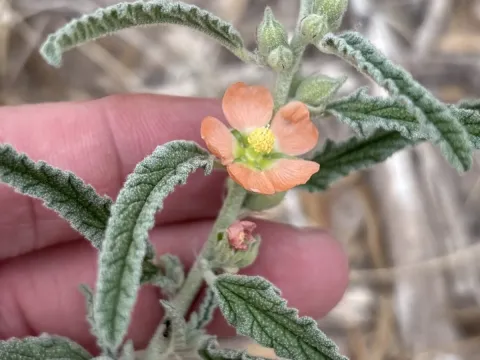
Sphaeralcea cuspidata
Sphaeralcea cuspidata
Sphaeralcea cuspidata, belonging to the Malvaceae family, is a resilient perennial shrub. Seeds should be sown in early spring once the soil temperature reaches approximately 12–15 degrees Celsius for optimal germination.
What the section contains
Sphaeralcea cuspidata
Because the seeds possess a hard seed coat, scarification is highly recommended to improve moisture absorption and ensure a higher germination rate. Planting depth should be kept shallow, between 1 and 2 centimeters.
The seeding rate typically ranges from 4 to 6 kilograms per hectare. Using a row-planting method facilitates better weed control during the establishment year when the seedlings are developing their root systems.
During the first year, the plant focuses primarily on root development rather than above-ground biomass. This establishes a robust underground architecture that enables long-term survival in arid environments.
Firming the soil after sowing is essential to ensure adequate capillary action for the seeds. This step is critical in dryland agriculture to prevent moisture loss from the seedbed.
This species is a true xerophyte, perfectly adapted to environments with limited rainfall. It thrives in well-drained, sandy or loamy soils and is tolerant of a wide range of pH levels, including slightly alkaline conditions.
Full sun exposure is a mandatory requirement for healthy growth. The plant does not tolerate shading and will exhibit stunted development if grown under dense canopy or structures.
Sphaeralcea cuspidata is notably salt-tolerant, making it an excellent candidate for reclaiming marginal or saline soils. Conversely, the plant is highly sensitive to waterlogged conditions, which can lead to rapid decay of the root system.
Optimal growth occurs at temperatures between 25 and 35 degrees Celsius. The species exhibits strong winter hardiness, allowing it to survive dormant periods in regions with significant temperature fluctuations.
Nutritional requirements are relatively low compared to traditional cereal crops. While the plant is adapted to poor soils, applying controlled amounts of phosphorus can enhance biomass productivity in professional farming settings.
One of the primary benefits of this crop is its natural resistance to many common agricultural pests. The presence of specific chemical compounds in its tissues serves as an effective defense against various insects.
Fungal pathogens such as root rot can emerge if the soil remains excessively wet for prolonged periods. Maintaining proper drainage and avoiding over-irrigation are the best preventative strategies for these issues.
Spider mites can occasionally affect the foliage during periods of extreme heat and drought. Regular monitoring and the application of organic-certified treatments are sufficient to manage these isolated incidents.
Weed management is the most significant challenge during the initial establishment phase. Implementing consistent inter-row cultivation is vital to ensure that young plants are not outcompeted for resources.
To maintain long-term crop health, it is essential to follow a diverse crop rotation plan. Avoiding consecutive planting on the same site helps to mitigate potential soil-borne disease accumulation.