
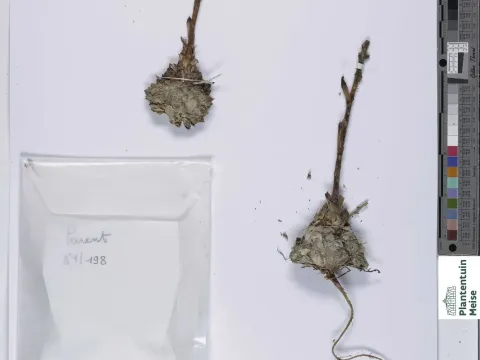
Kindinger's Houseleek
Sempervivum kindingeri
Kindinger's Houseleek (Sempervivum kindingeri) is a perennial succulent belonging to the Crassulaceae family. It is native to the rugged terrains of the Balkan Peninsula, where it naturally inhabits rocky cliffs and mountain slopes.
What the section contains
Kindinger's Houseleek
Botanically, it is characterized by dense rosettes of fleshy leaves that serve as water-storage organs. This evolutionary adaptation allows the plant to thrive in nutrient-poor environments with limited moisture availability.
Cultivation success relies heavily on well-draining soil conditions. It is essential to use a gritty, mineral-based growing medium to prevent moisture accumulation around the roots, which can be fatal to the plant.
The plant thrives in full sun exposure, which is necessary to maintain its structural integrity and color intensity. Shade-grown specimens often become etiolated and lose their characteristic compact growth habit.
This species is highly resilient to temperature fluctuations and is well-suited for temperate climates. It requires minimal intervention once established, making it a low-maintenance choice for rock gardens and green roofs.
The primary concern for Kindinger's Houseleek is fungal infection triggered by excessive moisture and poor soil aeration.
Root rot is the most common condition caused by improper watering techniques or heavy, water-retentive soils that do not provide adequate drainage.
Root mealybugs pose a significant threat as they feed on the roots, causing the rosette to decline in vigor without immediate visible signs of damage on the leaves.
Leaf-feeding insects, such as weevils, may occasionally target the rosettes, causing unsightly mechanical damage that can invite secondary infections.
Preventive care involves strict water management and maintaining high-quality drainage, which is the cornerstone of protecting these succulent species from pests and diseases.