
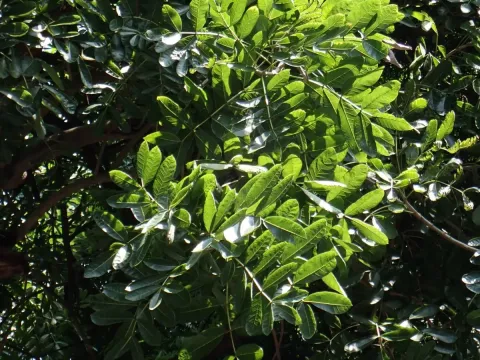
Kigelia pinnata
Kigelia pinnata
Propagation of Kigelia pinnata, a member of the Bignoniaceae family, is primarily conducted through seeds. The seeds possess a hard coat and require soaking in warm water or gentle scarification to improve germination rates significantly.
What the section contains
Kigelia pinnata
The optimal time for sowing is during the warm spring months when soil temperatures consistently remain between 22 and 28 degrees Celsius. Using a well-draining, sandy loam substrate is essential for successful seedling development.
Seedlings emerge within 3 to 8 weeks depending on ambient humidity and soil thermal conditions. During the initial growth phase, consistent moisture is vital, although care must be taken to avoid waterlogging.
Container cultivation is recommended for the first 12 to 24 months to ensure the sapling develops a robust root system before transplanting to an open-field location or a permanent plantation site.
Proper spacing is crucial when planting in agricultural settings, as mature trees develop large, spreading canopies. Providing at least 8 to 10 meters of distance between trees ensures adequate air circulation and light penetration.
Kigelia pinnata is a strictly tropical species that demands frost-free environments. It thrives in regions where temperatures are consistently high, making it unsuitable for temperate climates without controlled environments.
The tree prefers fertile, deep soil profiles with a slightly acidic to neutral pH. High organic matter content significantly boosts growth rates and enhances the overall health and yield of the tree during its productive years.
While mature trees exhibit some degree of drought tolerance, optimal biomass production and consistent fruiting require regular irrigation, especially during the flowering and fruit-setting stages of development.
Full solar exposure is mandatory for Kigelia. The species is highly photophilous and performs poorly in shaded areas, which can lead to elongated, weak branches and reduced fruit production per unit area.
Maintaining proper soil aeration is necessary to prevent root diseases. In intensive cultivation, regular monitoring of the soil moisture levels and avoiding soil compaction around the drip zone are key agronomic practices.
The primary commercial yield of Kigelia pinnata consists of its large, sausage-shaped fruits, which are highly valued for their bioactive compounds, including iridoids and naphthoquinones.
These compounds are extensively used in the pharmaceutical and cosmetic industries for the production of skin-care products, wound-healing agents, and natural anti-inflammatory remedies.
The bark and leaves also contain therapeutic substances used in traditional medicine, although fruit production remains the main focus for large-scale agricultural operations targeting extractives.
Wood from the sausage tree is dense and durable, though it is typically harvested as a secondary product rather than being the primary goal of cultivation in medicinal plant plantations.
Average yield per mature tree is substantial, given the size of the fruits, which can reach 60 centimeters in length and weigh nearly 10 kilograms, providing a high density of raw materials per hectare.
The crop is susceptible to various leaf-chewing insects and sap-sucking pests like aphids and scale insects, which can impede growth in young saplings by reducing the photosynthetic surface area.
Fungal pathogens causing leaf spot and root rot are prevalent in areas with high humidity and poor soil drainage. Implementing a rigorous irrigation schedule and proper field drainage minimizes these risks.
Nematodes pose a potential threat in nursery conditions, particularly in sandy soils. Sterilizing the growing medium and using resistant rootstocks can help mitigate these soil-borne biological challenges.
Bacterial infections can affect the trunk if the bark is mechanically damaged during harvest or field maintenance. Proper tool hygiene is essential to prevent the spread of pathogens between trees.
Biological control strategies, such as introducing beneficial insects, are preferred over synthetic pesticides to maintain the ecological balance of the plantation and ensure the purity of the medicinal raw materials.
Harvesting is performed manually to ensure the fruits are collected at the peak of their physiological maturity, characterized by specific surface textures and internal chemical composition.
The fruits ripen progressively, requiring repeated collection cycles across the plantation to maximize yield and ensure all collected produce meets the required quality standards for processing.
Great care must be exercised during the harvest, as the fruits are exceptionally heavy and pose a significant safety risk to workers if they fall from the high canopy during collection.
Once harvested, the fruits must be transported to processing facilities for rapid cleaning and extraction, as their high moisture and sugar content make them highly perishable and prone to microbial spoilage.
Storage of the raw material before processing must occur in cool, well-ventilated conditions to slow down respiration rates and prevent internal degradation of the essential phytochemicals required for commercial use.