
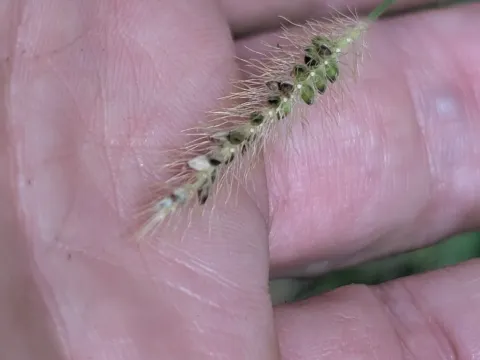
Knotroot foxtail
Setaria parviflora
Knotroot foxtail (Setaria parviflora) is a perennial grass species belonging to the Poaceae family. The plant is named for the knot-like structures at the base of its stems, which provide structural stability and contribute to its perennial nature.
What the section contains
Knotroot foxtail
Originating in the Americas, this grass has expanded its range significantly due to its adaptability. It is commonly found in tropical and subtropical regions, though it thrives in various climates when soil moisture is sufficient.
This species is highly adaptable to a wide range of soil types, including sandy, loamy, and even clay-heavy soils. Its ability to withstand periodic waterlogging makes it a suitable candidate for land that remains wet for long periods.
Knotroot foxtail requires full sunlight for optimal growth and biomass production. It is a warm-season grass, meaning it shows the most vigorous growth during high-temperature months when moisture is available.
In terms of soil management, the grass is relatively undemanding. However, it responds well to soil fertility management, which encourages faster recovery after grazing or mowing, making it a reliable pasture grass.
The primary agricultural use of Knotroot foxtail is as forage for livestock. It produces a dense canopy of foliage that can be grazed directly by cattle, sheep, and other herbivores, providing essential nutrients.
The nutritional value is highest in the vegetative phase before the plant begins to produce seed heads. Farmers often manage grazing schedules to ensure that the grass remains in its palatable, leafy stage as long as possible.
If harvested for hay, the timing of the cut is critical. Once the plant reaches maturity and develops its characteristic bristly seed heads, the nutritional quality and digestibility decrease significantly due to high fiber content.
The grass also plays a crucial role in soil conservation. Its deep, dense root network effectively binds the soil, making it useful for stabilizing slopes and reducing erosion in agricultural landscapes.
Seed production is prolific, ensuring that the stand remains thick and productive over time. This makes it a cost-effective choice for long-term pasture development in suitable climatic zones.
Common diseases affecting Knotroot foxtail include rusts and smuts, which typically appear during periods of high humidity and heat. These fungal infections can damage the leaves and reduce the overall biomass.
Pests such as aphids and various grass-feeding insects may target the tender leaves. While usually not fatal to the plant, significant infestations can stunt growth and reduce the yield available for livestock.
Soil-borne pathogens can sometimes affect the root system, especially if the soil stays saturated for prolonged periods. Maintaining adequate soil health is the best defense against these underground threats.
Management of these threats often involves cultural practices rather than chemical intervention. Rotational grazing helps prevent the buildup of pest populations and promotes a healthier, more diverse pasture environment.
Monitoring the pasture for signs of disease or pest stress is recommended during the peak growing season to ensure that the forage quality remains high for livestock consumption.