
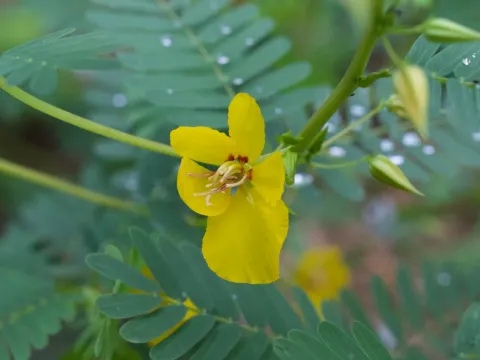
Sensitive pea
Cassia chamaecrista
The sowing of Cassia chamaecrista is typically performed in the spring season when soil temperatures remain consistently above 15 degrees Celsius. Ensuring that the soil is sufficiently warmed is crucial for rapid germination and minimizing the risk of seed rotting in cold, damp conditions.
What the section contains
Sensitive pea
Seeds of this species feature a hard seed coat, which necessitates pre-sowing scarification to increase water absorption. Furthermore, seed inoculation with rhizobium bacteria is highly recommended to establish efficient nitrogen fixation from the onset of seedling growth.
The seeding rate must be adjusted based on the soil quality and the desired crop density. The seeds should be planted at a depth of 2–3 centimeters, providing enough coverage to prevent desiccation while allowing the emerging shoots to reach the surface with ease.
A row spacing of 15 to 30 centimeters is ideal, as it facilitates weed control operations and allows for sufficient airflow between the rows. After sowing, the field should be rolled to ensure excellent soil-to-seed contact, which helps in drawing soil moisture towards the seeds.
In large-scale farming, precise placement of the seeds is vital. Uniform seed distribution prevents overcrowding, which in turn reduces inter-plant competition for light and nutrients, leading to a more homogeneous crop stand across the entire field.
Cassia chamaecrista is a hardy legume that thrives in various soil types, particularly those with good drainage. While it can survive on relatively poor soils, it exhibits superior growth performance when planted in fertile, loamy soils with a pH ranging from neutral to slightly acidic.
The crop is characterized by its high light demand and prefers sunny locations. Exposure to sufficient sunlight is critical for its metabolic processes, particularly in the production of energy required for effective nitrogen fixation and biomass accumulation.
Temperature plays a significant role in the plant's development cycle. It is a warm-season legume that requires a frost-free growing period to reach its full potential. Any prolonged exposure to cold weather can significantly stunt the growth and overall health of the plants.
Weed management is vital during the initial establishment phase, as the plant grows slowly until it develops a robust root system. Keeping the inter-rows clear of invasive weeds ensures that the Cassia plants have access to essential soil nutrients and water.
Adequate moisture levels are necessary during the flowering and pod-filling stages. Although the plant shows reasonable drought tolerance, supplemental irrigation during extreme dry spells can substantially improve seed yield and the quality of the green forage.
Root rots are the most common pathological threats to Cassia chamaecrista, particularly under conditions of poor drainage or excessive soil moisture. These pathogens target the root system, ultimately depriving the plant of its ability to uptake water and nutrients effectively.
Various insect pests, including beetles and certain mite species, are known to feed on the tender foliage and developing pods of the plants. These pests can significantly reduce the photosynthetic capacity and diminish the total yield of the crop if left unmanaged.
To combat these threats, a proactive approach to crop management is necessary. Implementing a strict crop rotation cycle breaks the life cycle of many soil-borne pathogens and helps maintain a healthier field environment for subsequent planting seasons.
Monitoring the fields for early signs of infection or pest infestation allows for targeted and efficient intervention. This helps in minimizing the use of broad-spectrum chemicals, thereby preserving the health of the soil microbiome and surrounding ecosystems.
In cases where chemical control is required, all treatments should strictly follow integrated pest management guidelines. This ensures that the crop remains safe for its intended use while maintaining environmental sustainability and agricultural productivity.