
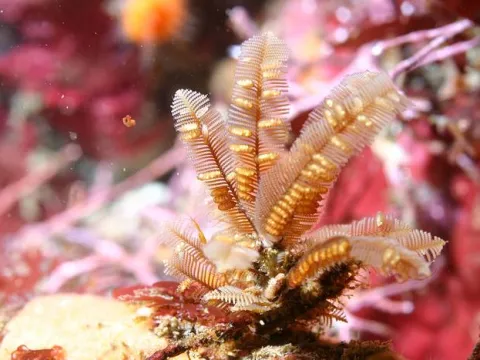
Sertularia
Sertularia
Sertularia is a genus of colonial hydroid polyps belonging to the family Sertulariidae. It is not an agricultural crop but a marine organism found in various ocean environments. These organisms grow in branching colonies, often attached to stones, shells, or marine flora.
What the section contains
Sertularia
Environmental conditions are paramount for the survival of these hydroids. They thrive in clean, oxygenated waters where currents facilitate the capture of planktonic prey. They are strictly marine and do not require agricultural management, such as sowing or fertilization.
The morphology of Sertularia is characterized by a chitinous exoskeleton, which provides structural integrity for the colony. This protective layer allows the polyps to withstand harsh currents while extending their tentacles to feed on passing microscopic organisms.
These organisms serve as an essential indicator of water quality in coastal ecosystems. A healthy population of Sertularia indicates a balanced, nutrient-rich, and unpolluted environment, making them relevant subjects for environmental research.
Geographically, species of the genus are distributed globally, primarily in temperate and polar regions. They contribute to the complexity of the seafloor habitat, providing niches for various other small marine invertebrates.
The primary threats to Sertularia populations involve environmental degradation, specifically water pollution caused by industrial runoff. Chemicals and heavy metals can accumulate in the tissues, negatively impacting the growth rate and reproduction of the polyps.
Rising sea temperatures pose a significant risk, as these organisms are adapted to specific thermal ranges. Excessive heat promotes the growth of harmful bacteria and parasites, leading to colony decline and systemic diseases.
Eutrophication of marine waters leads to an overabundance of algae, which can smother the colonies and compete for oxygen. This process frequently results in the local extinction of established hydroid colonies in shallow areas.
Physical destruction of the seafloor through dredging, trawling, or coastal construction remains a direct threat. Since these organisms are sessile, they cannot escape habitat loss, and recovery is a slow process due to their specific recruitment needs.
Invasive species or shifts in local predator-prey dynamics can also destabilize the colonies, as new predators may find these stationary organisms to be an easy and abundant food source.