
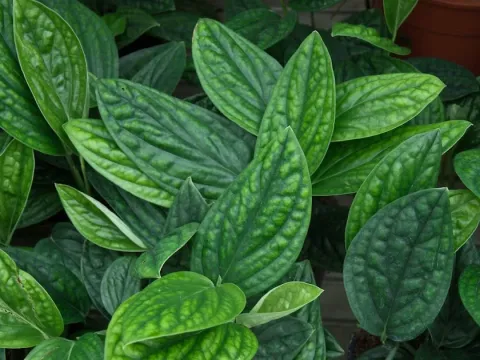
Scindapsus haenkei
Scindapsus haenkei
Scindapsus haenkei is a tropical evergreen climber belonging to the Araceae family. Originating from the humid forests of Southeast Asia, this species is well-known for its robust growth habit and ornamental leaf structure, commonly cultivated as a decorative indoor plant.
What the section contains
Scindapsus haenkei
The plant thrives in bright, indirect light conditions. Direct sunlight exposure should be avoided as it can scorch the foliage, while insufficient lighting leads to weak stems and a loss of the characteristic variegation or color depth of the leaves.
For optimal development, the ambient temperature should be maintained between 20°C and 25°C. The plant is highly sensitive to cold drafts and rapid temperature fluctuations, which can trigger leaf drop and stunt the overall development of the vine.
Soil requirements focus on high aeration and drainage. A standard substrate mixture includes orchid bark, perlite, and high-quality peat moss, which mimics the natural epiphyte environment and prevents the roots from sitting in stagnant water.
Maintenance involves frequent, light watering and maintaining a high relative humidity level. If grown in containers, it is essential to ensure that the drainage holes remain unobstructed to prevent the accumulation of salts or water-logging of the root zone.
The primary pests affecting Scindapsus haenkei include spider mites, mealybugs, and scale insects, which frequently target the plant when grown in environments with low humidity.
Root rot is the most common physiological disorder caused by overwatering or using a substrate with poor permeability, which promotes the growth of anaerobic bacteria and pathogenic fungi.
Management of pest populations involves regular physical cleaning of the foliage and the application of horticultural soaps or specific systemic insecticides when necessary.
Proper sanitation of the growing environment and ensuring adequate airflow are critical practices to reduce the incidence of fungal leaf spots and bacterial blight.
Monitoring the undersides of leaves for clusters of insects is a recommended agricultural practice for early detection and prevention of major infestations.