
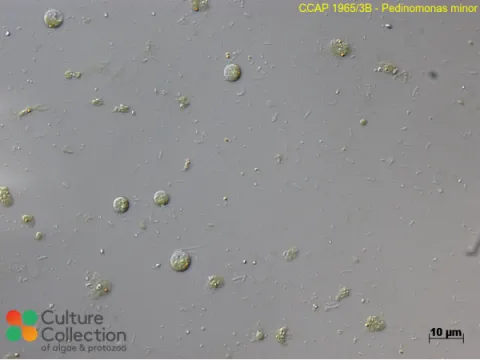
Pedinomonas
Pedinomonas
Pedinomonas is a genus of unicellular green algae belonging to the Pedinomonadaceae family. These microscopic organisms are known for their simple structure and high physiological efficiency, making them relevant models for both scientific research and industrial applications.
What the section contains
Pedinomonas
To cultivate Pedinomonas effectively, it is essential to provide controlled lighting conditions. These algae require a specific spectral range of light to optimize photosynthesis while avoiding light-induced damage to the cellular apparatus.
The chemical composition of the culture medium must be carefully balanced. Nitrogen and phosphorus are the primary limiting factors for growth, while essential trace elements, such as iron and manganese, are necessary for the development of healthy chloroplasts.
Temperature control is another critical requirement. Most strains thrive at temperatures between 20°C and 25°C. Stability in thermal conditions is key to ensuring consistent cell division rates and preventing physiological stress.
The cultivation process is typically carried out in photobioreactors that allow for precise regulation of gas exchange. Adequate CO2 supply and continuous mixing are mandatory to prevent cell sedimentation and maintain homogenous conditions throughout the medium.
Yield in Pedinomonas production is defined by the final biomass concentration per unit volume. Optimized cultivation strategies can lead to high density, which is essential for the economic viability of large-scale algal production.
The productivity is strongly influenced by the specific strain selection and the efficiency of the bioreactor design. Advanced systems allow for the harvesting of large quantities of biomass with minimal contamination risks.
Targeted production of bioactive compounds is a major aspect of yield management. By manipulating the nutrient ratios during the late growth phase, growers can shift the metabolic pathways of the cells to accumulate specific proteins or lipids.
The harvesting process involves efficient separation techniques such as centrifugation or membrane filtration. The quality of the final product is maintained by ensuring that harvesting occurs at the peak of the exponential growth phase.
Continuous monitoring of biomass density allows for real-time adjustments to the culture environment, ensuring that the maximum yield potential of the crop is realized throughout the production cycle.
One of the primary threats to Pedinomonas cultures is the risk of contamination by protozoan predators. These organisms can consume vast amounts of algal biomass in a very short period, leading to rapid culture collapse.
Bacterial contamination represents another significant challenge. Competitive microflora can grow faster than algae, depleting the nutrients and releasing metabolic byproducts that inhibit the growth and health of the Pedinomonas cells.
Environmental stress, such as sudden fluctuations in pH or temperature, can trigger a defense response that halts cell division. If prolonged, these conditions lead to pigment degradation and subsequent cell death.
Inadequate ventilation or mixing leads to the accumulation of toxic metabolic products within the culture. This is often observed in stagnant zones of a bioreactor, which become hotspots for disease and infection.
Management of these threats is achieved through strict hygiene protocols and the use of sterile filtered air and pre-treated media, which prevent the introduction of harmful microorganisms into the closed production system.