
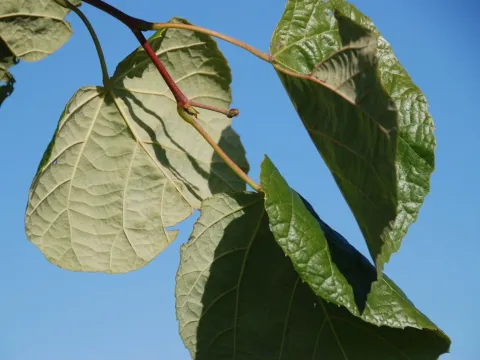
Pendant silver linden
Tilia petiolaris
Tilia petiolaris, commonly known as the pendant silver linden, belongs to the Malvaceae family. It is a graceful tree recognized for its drooping branches and silver-backed leaves that shimmer in the wind.
What the section contains
Pendant silver linden
Originating from Southeastern Europe and the Balkan Peninsula, this tree thrives in temperate climates. It is highly regarded for its ability to tolerate urban pollution, making it an excellent choice for city parks.
The tree prefers deep, fertile, and well-drained soils. While it can tolerate a variety of soil types, it performs best in neutral to slightly alkaline conditions with consistent moisture availability.
Regarding climate requirements, the pendant silver linden prefers sunny locations but can tolerate partial shade. It requires protection from strong, desiccating winds that can damage its delicate foliage.
Proper maintenance includes structural pruning in the early years to establish a strong central leader, ensuring the tree develops its iconic pendulous and symmetrical habit.
Aphids are the most common pests affecting this species, often leading to the production of honeydew and subsequent growth of sooty mold on the upper surface of the leaves.
Spider mites may become a problem during hot, dry summers, causing the foliage to lose its characteristic color and potentially leading to premature leaf drop if untreated.
Leaf spot diseases can occur in humid environments with poor air circulation, necessitating the removal and destruction of fallen leaves to prevent fungal spores from overwintering.
Verticillium wilt is a more serious concern for the root system, which can be mitigated by ensuring the tree is not planted in waterlogged soil where oxygen levels are low.
Regular inspections for scale insects and bark beetles are recommended, as these pests can cause significant damage to the vascular system of older, stressed specimens.