
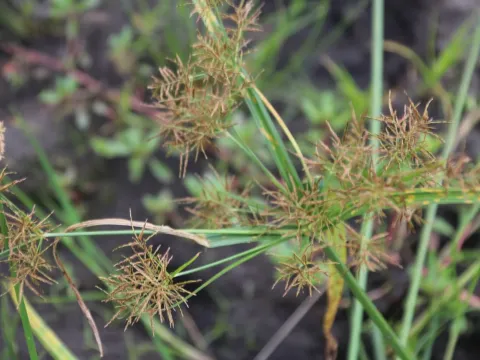
Mariscus longibracteatus
Mariscus longibracteatus
Mariscus longibracteatus is a notable species within the Cyperaceae family, often recognized for its role in wetland ecosystems and its potential for agricultural use in moist environments.
What the section contains
Mariscus longibracteatus
Sowing should be scheduled for the spring season when soil temperatures are consistently above 15 degrees Celsius, ensuring a successful germination process.
Seeds of this species perform best when sown in prepared beds that mimic their natural humid habitat, requiring careful moisture management during the early growth stages.
The spacing between rows should be calibrated to facilitate healthy air circulation, which prevents the development of fungal pathogens during the plant's development.
Applying an organic mulch layer after sowing can help retain the necessary soil moisture and suppress competition from undesirable weed species.
The plant thrives in water-saturated soils, making it an excellent candidate for planting in areas with high water tables or near irrigation channels.
Soil composition should ideally be rich in organic matter, such as peat or fertile silt, which provides the necessary nutrients for vigorous stem growth.
Full sun exposure is preferred, as it maximizes the photosynthetic activity of the plant, leading to higher yields of biomass per hectare.
The climate requirements include a warm environment, typically found in tropical and subtropical regions, as the plant is sensitive to prolonged frost conditions.
Regular monitoring of soil pH is recommended, as maintaining a neutral to slightly acidic range supports optimal nutrient uptake for this specific sedge species.
The primary use of Mariscus longibracteatus in agriculture is as a biomass source, which can be harvested for compost production or specialized cattle fodder.
Yield capacity is significantly improved by proper fertilization management, emphasizing a balanced approach to prevent excessive nitrate buildup in the tissues.
Beyond traditional fodder, the plant's structural properties make it useful for erosion control, helping to stabilize soil along pond and stream banks effectively.
In various industrial applications, this species has been studied for its potential as a raw material in the manufacturing of organic textiles or bio-based packaging.
Annual biomass output is generally stable, provided that the water regime remains consistent throughout the main part of the growing season.
Disease pressure is generally low for this species, but root rot can become a significant issue if the soil remains stagnant for too long without proper drainage.
Certain coleopteran pests may feed on the stems and leaves, requiring periodic scouting to determine if intervention with organic pest controls is necessary.
Weed management during the first three weeks of growth is essential, as the young seedlings are not yet robust enough to outcompete aggressive invasive weeds.
In some cases, viral pathogens transmitted by insects can affect leaf health, necessitating the removal and destruction of infected individuals to prevent spread.
Maintaining a diverse planting ecosystem can help naturally suppress pest populations, reducing the need for intensive chemical applications on the field.
Harvesting is typically performed just as the plant enters its flowering stage, which ensures the highest possible quality for intended agricultural uses.
Mechanical harvesting equipment must be set to the appropriate cutting height to preserve the root crowns and allow for rapid regrowth of the next cycle.
Once harvested, the material must be processed or dried immediately, given the high internal moisture content that characterizes most sedge species.
Balancing moisture levels during storage is crucial, as excess water within the harvested biomass can lead to spontaneous fermentation or mold growth.
Efficient post-harvest handling includes clean transport and rapid movement to processing facilities to ensure the product remains in prime condition for final use.