
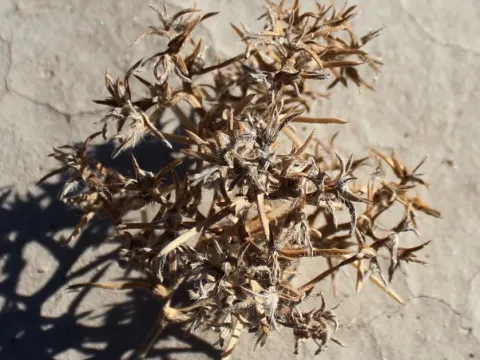
Halimocnemis pilifera
Halimocnemis pilifera
Halimocnemis pilifera is an annual herbaceous plant belonging to the Amaranthaceae family. It is a highly specialized halophyte that thrives in environments characterized by high salinity and low water availability, making it an interesting subject for desert agriculture.
What the section contains
Halimocnemis pilifera
The botanical characteristics include succulent stems and a characteristic pilose (hairy) covering, which helps the plant reduce transpiration and protect itself from harsh solar radiation. This morphology is essential for its survival in arid conditions.
Originating from Central Asian deserts, this species is naturally adapted to saline flats and saline soils where few other crops can persist. Its ability to accumulate salts in its tissues allows it to maintain osmotic balance in hyper-saline environments.
For cultivation, the plant requires high solar exposure and well-drained, albeit saline, soils. It does not require high nitrogen levels but benefits from structural integrity of the soil to support its deep and expansive root architecture.
The plant's utility is primarily centered on forage production in marginal land areas. Integrating Halimocnemis pilifera into pasture management systems can provide necessary biomass where conventional fodder crops fail to grow.
Pests such as locusts and grasshoppers represent the most significant threat to Halimocnemis pilifera, as they can consume large portions of the succulent biomass within a short period.
Fungal pathogens can occasionally affect the plant if moisture levels become excessive, leading to crown or stem rot, which is detrimental to overall yield.
Sucking insects that target the succulent tissues of the plant can lead to reduced vigor and stunted growth, negatively impacting the plant's final dry weight.
Management strategies focus on monitoring population density of insects rather than intensive chemical intervention to preserve the ecological balance of the region.
Maintaining proper spacing between plants helps reduce the micro-humidity around the stems, which is the most effective preventative measure against fungal outbreaks.