
Larrea divaricata
Larrea divaricata
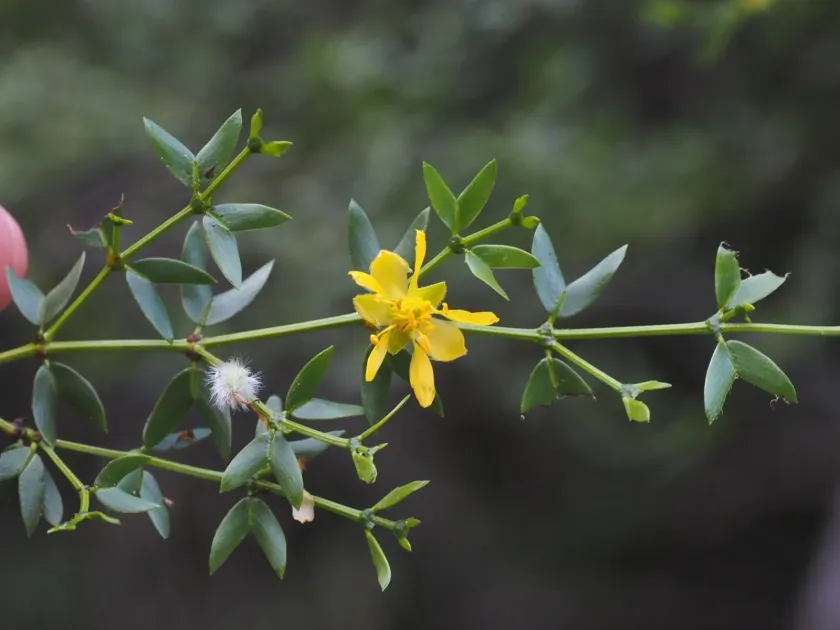
Description
Growing requirements
Larrea divaricata, commonly known as a type of creosote bush, is a woody perennial shrub belonging to the Zygophyllaceae family. It is native to the arid regions of South America and is renowned for its extreme resilience to drought and heat.
The plant thrives in well-drained, gravelly, or sandy soils. It has an extensive root system capable of searching for deep groundwater, which allows it to survive in environments where surface moisture is almost non-existent for long periods.
Regarding climatic requirements, Larrea divaricata needs high solar radiation and low relative humidity. It is an obligate heliophyte, meaning it requires full sun to maintain its metabolic functions and produce its characteristic waxy leaf coating.
Water management is critical; the plant is highly susceptible to root rot if grown in heavy, waterlogged soils. In cultivation, irrigation should be strictly controlled to mimic natural desert rainfall patterns, focusing on occasional deep watering rather than frequent wetting.
The plant exhibits a slow growth rate, which is a structural adaptation to nutrient-poor desert soils. This slow metabolism makes it highly efficient in energy conservation, though it necessitates a long-term approach to any commercial cultivation efforts.
Harvesting
The primary agricultural interest in Larrea divaricata lies in its leaves and twigs, which are harvested for the extraction of nordihydroguaiaretic acid (NDGA). This compound is highly valued for its strong antioxidant and preservative properties.
Harvesting should be performed by selectively pruning distal branches, ensuring that the main structure of the shrub remains intact. This approach promotes regrowth and sustains the health of the individual plant for future harvests.
Post-harvest processing involves rapid but gentle drying in controlled conditions. Exposure to excessive heat during drying can alter the chemical profile of the plant, potentially reducing the efficacy of the active compounds required for industrial applications.
The industrial usage of this culture spans across pharmaceuticals, food preservation, and specialized dermatological skincare. The plant's natural antimicrobial properties make it a sought-after ingredient for natural product formulations.
Sustainability is the most important aspect of its harvest. Given its slow reproduction rate in the wild, commercial production must focus on managed agricultural fields to ensure a consistent supply without depleting wild plant populations.