
Creosote bush
Larrea tridentata
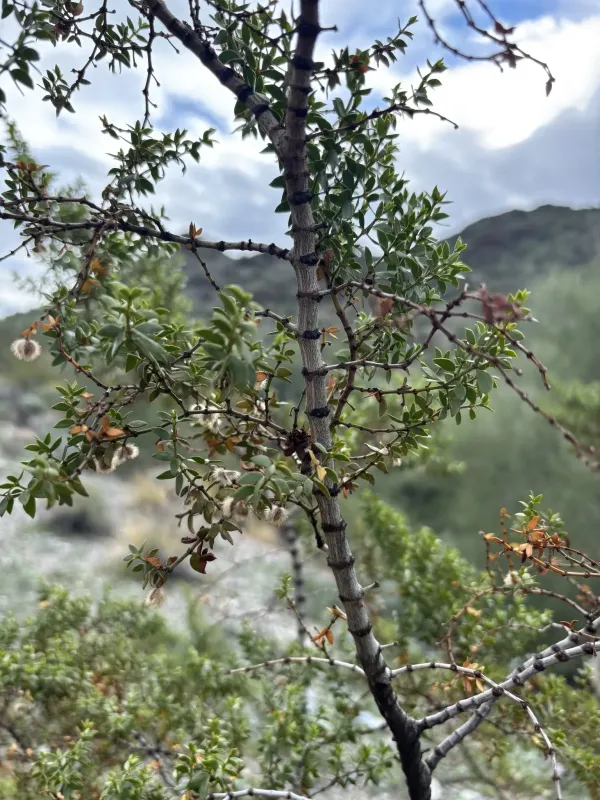
Description
Growing requirements
Larrea tridentata, commonly known as the creosote bush, is a perennial shrub belonging to the Zygophyllaceae family. It is a defining plant of the North American arid regions, thriving in harsh desert conditions.
The plant is highly xerophytic, possessing specialized physiological mechanisms to survive extreme heat and prolonged drought. Its leaves are coated with a resinous substance that gives off a distinct scent and prevents moisture loss.
Cultivation of this species requires sandy or gravelly soil with excellent drainage. It cannot tolerate waterlogged conditions, which lead to root rot. High solar radiation is essential for the plant to maintain its metabolic functions.
The species has an incredible ability to regulate its growth based on available water resources. In controlled environments, irrigation must be strictly monitored to mimic the natural wetting and drying cycles of desert regions.
Industrially, Larrea tridentata is valued for nordihydroguaiaretic acid (NDGA). This compound is utilized as an antioxidant in food production and is subject to research for its potential pharmacological benefits in various health supplements.
Main diseases and pests
The chemical defenses of the creosote bush, mainly its toxic resins, provide strong protection against most insect herbivores and generalist pests, making it a very low-maintenance species in its native range.
While resistant to most pests, the plant can be susceptible to soil-borne pathogens if grown in non-native, humid climates with inadequate soil aeration. Monitoring for root fungal infections is the primary concern for agronomists.