
Lignum vitae
Guaiacum officinale
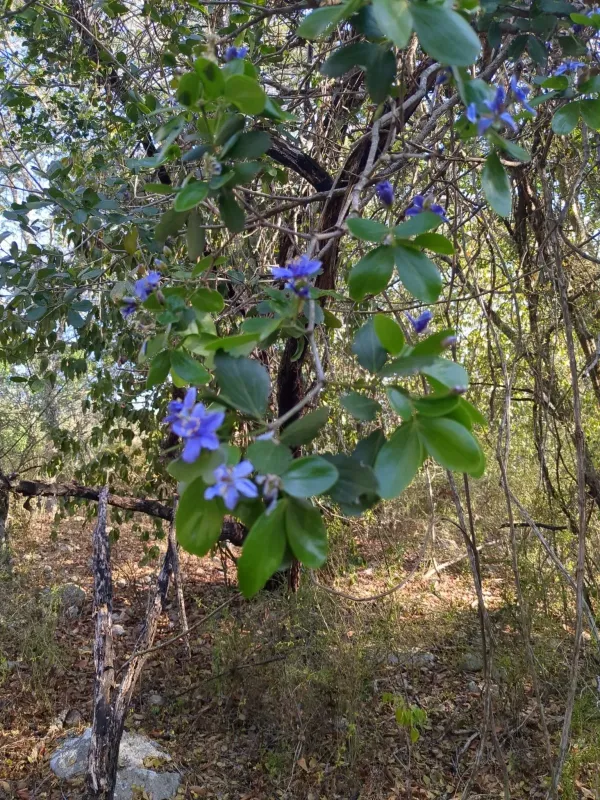
Description
Sowing dates
Propagating Guaiacum officinale is primarily achieved through seed germination. Due to the hard seed coat, scarification is necessary to improve and accelerate the germination rate.
Seeds should be sown in a well-draining, sandy-loam substrate. Constant moisture and warmth are required, but caution must be taken to avoid waterlogging the soil during the early stages.
In nursery settings, shading is crucial for young seedlings, as they are susceptible to desiccation under intense direct sunlight before they establish a proper root system.
Transplanting into the permanent field site should ideally align with the onset of the rainy season to ensure the young saplings can establish themselves before the onset of extreme heat.
The cultivation process is exceptionally slow, as Guaiacum officinale is among the slowest-growing tree species, requiring patience and long-term planning for successful plantation management.
Growing requirements
Lignum vitae is a member of the Zygophyllaceae family. It is native to the Caribbean islands and the northern coast of South America, thriving in arid to semi-arid tropical climates.
The tree prefers calcareous or rocky soils with excellent drainage. It is highly drought-tolerant, having evolved to survive in regions with significant dry periods during the annual cycle.
This species demands high ambient temperatures throughout the year. It has zero tolerance for frost, which limits its commercial cultivation to specific tropical geographical zones.
Full sun exposure is essential for the healthy development of mature trees. While saplings benefit from partial shade, adult trees flourish under constant, intense tropical sun.
The tree is remarkably resistant to salt spray, making it suitable for coastal areas where other types of vegetation would struggle due to high salinity in the air.
Yield
The primary economic output of Guaiacum officinale is its wood, arguably the densest and hardest timber in the world. It is so heavy that it sinks in water.
The wood contains high concentrations of natural guaiac resins, which provide self-lubricating properties. This made the wood highly sought after historically for manufacturing ship propeller shaft bearings and industrial bushings.
Beyond timber, the wood and resin are utilized in the pharmaceutical industry for their anti-inflammatory and antiseptic properties, often used in traditional remedies.
Due to the extremely slow growth rate, the yield of mature timber is a long-term investment. Harvesting is only economically viable after several decades of careful tree management.
The global demand for high-quality, durable wood has historically led to over-exploitation, necessitating conservation efforts to protect remaining wild stands.
Main diseases and pests
Guaiacum officinale possesses a robust natural defense mechanism against many common wood-boring insects and fungi, thanks to the high resin content within its heartwood.
The most significant threats to young plants in nurseries are soil-borne pathogens and root rot, which typically arise if the soil drainage is inadequate.
In certain regions, invasive plant species pose a competitive threat to juvenile Guaiacum trees, often outcompeting them for light and soil nutrients during the slow early growth phase.
The primary threat remains habitat destruction and over-logging, which have restricted the natural range of the species significantly compared to historical data.
- Susceptibility to root rot if soil aeration is poor.
- Minor damage from tropical defoliators during the peak rainy season.
- Slow growth making it vulnerable to invasive vegetation interference.