
Lignum vitae
Guaiacum sanctum
Description
Growing requirements
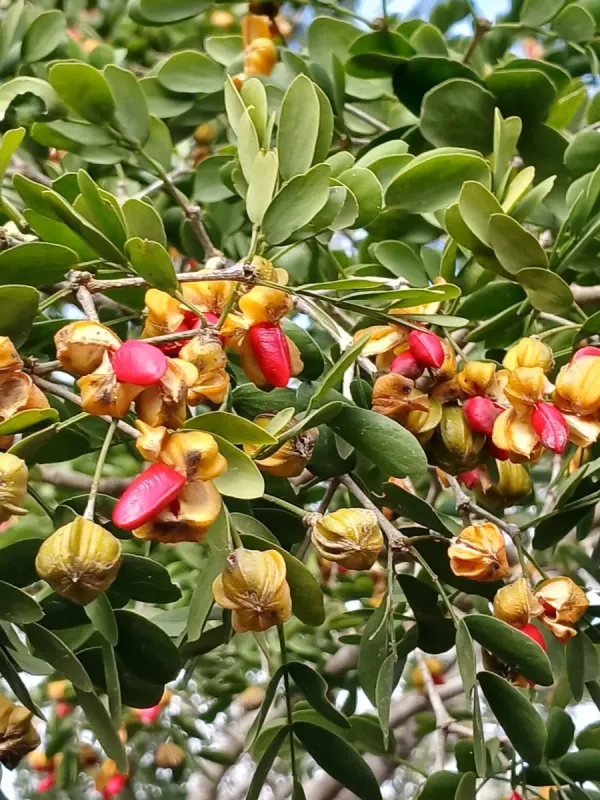
Lignum vitae (Guaiacum sanctum) is a slow-growing evergreen tree belonging to the Zygophyllaceae family. Known for its exceptional density, it is native to the Caribbean, Central America, and parts of Florida, thriving in dry tropical forests.
The tree requires full sun exposure and well-drained soils to prosper. It is exceptionally tolerant of nutrient-poor, rocky, or limestone substrates, making it an ideal species for reforestation in harsh tropical environments.
Climatic requirements are strict: the species is frost-intolerant and demands year-round warm temperatures. It is well-adapted to environments with prolonged dry seasons, relying on its efficient water-use strategy to survive seasonal water shortages.
Agrotechnical management involves careful selection of planting sites. Because of its sensitive taproot, direct seeding or planting in biodegradable containers is preferred to avoid the shock associated with transplanting bare-root seedlings.
During the establishment phase, supplemental irrigation is necessary. However, once the tree is mature, its drought resistance is profound, requiring almost no human intervention in the form of irrigation or fertilization.
Main diseases and pests
The primary threat to Guaiacum sanctum is historical over-harvesting and habitat loss. As a species with a very slow regeneration cycle, it struggles to recover from large-scale land clearing or intensive logging operations.
In managed nurseries, fungal pathogens are the most common concern, usually arising from poor drainage or inadequate air circulation. Maintaining a dry, well-ventilated environment is key to preventing root rot.
Insects like scale insects and mealybugs can pose risks to seedlings. Integrated pest management (IPM) is recommended, prioritizing organic controls to protect the fragile ecosystem of the dry forest where the trees are planted.
Environmental stress from erratic weather patterns poses an increasing risk. Extreme storm events or uncharacteristic floods can lead to significant mortality rates among younger trees that have not yet established deep taproots.
Genetic diversity remains a concern for small, fragmented populations. Conservation efforts focus on protecting existing groves and establishing botanical corridors to facilitate natural pollination and seed dispersal.
Harvesting
The wood of Guaiacum sanctum, commercially known as Lignum vitae, is among the densest in the world. It is historically famous for its use in marine engineering, specifically for ship propeller shaft bearings due to its self-lubricating resinous properties.
The resin, extracted from the wood, is highly valued in the pharmaceutical industry. Historically used as a treatment for various ailments, it remains a component in specific tinctures and antioxidant supplements.
Commercial harvesting is strictly regulated under international trade laws, such as CITES, to prevent over-exploitation. Sustainable forest management practices are essential to ensure the slow-growing population remains viable for future generations.
Harvesting techniques focus on selective logging of mature specimens. The process is time-consuming, reflecting the tree's slow growth rate, which can span decades to reach harvestable timber size.
Beyond timber and resin, the tree serves a vital ecological role. Its blue to purple flowers provide essential nectar for pollinators, and its dense canopy offers refuge for diverse fauna in arid forest habitats.