
Seven-leaf creeper
Parthenocissus heptaphylla
Description
Growing requirements
The Seven-leaf creeper (Parthenocissus heptaphylla) is a vigorous perennial woody vine belonging to the Vitaceae family. Native to regions of North America, this plant is highly regarded for its rapid growth rate and exceptional ability to cover large vertical surfaces efficiently.
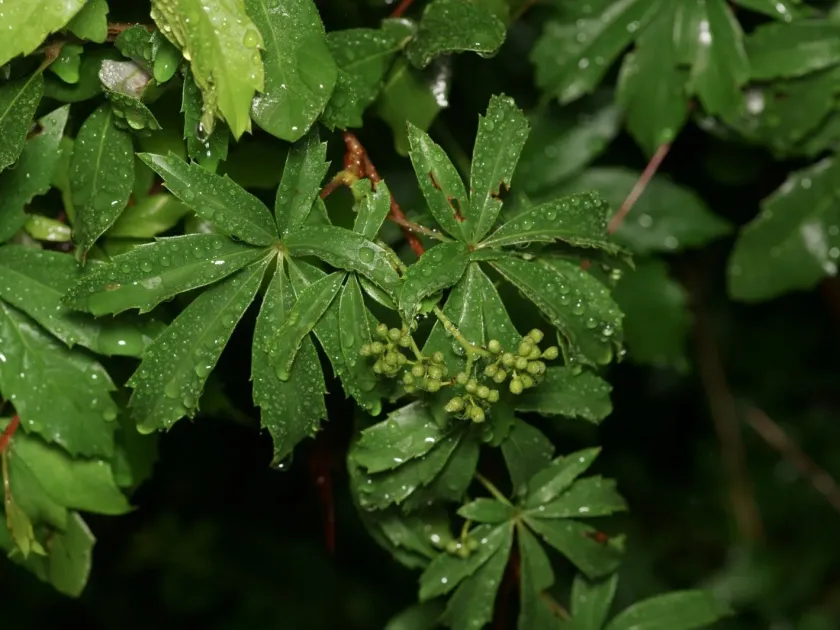
Botanically, it is distinguished by its palmately compound leaves, which typically feature seven distinct leaflets. The vine is equipped with specialized tendrils ending in adhesive disks, allowing it to cling firmly to walls, fences, and various support structures without the need for additional ties or trellises.
This species is renowned for its hardiness, showing excellent tolerance to a wide range of climatic conditions, including harsh winters and hot summers. It thrives in both sunny exposures and partial shade, although the most vibrant autumn foliage colors are achieved when the plant receives adequate sunlight.
Regarding soil, it is not particularly demanding but performs best in fertile, well-drained loamy soils. While it can adapt to various pH levels, avoiding waterlogged soil is crucial for the long-term health of the root system, so proper drainage should be ensured during the initial planting phase.
Basic maintenance includes periodic pruning to manage the vine's aggressive growth and maintain its aesthetic shape. Young plants benefit from regular watering until established, after which the Seven-leaf creeper becomes highly drought-tolerant and requires minimal intervention.
Main diseases and pests
The Seven-leaf creeper is recognized for its robust health and high resistance to most common diseases, making it a low-maintenance choice for both commercial landscaping and private residential gardens.
Minor occurrences of powdery mildew may happen in stagnant or overly humid conditions where airflow is restricted. Pruning back excess foliage and ensuring proper ventilation are the most effective cultural practices to prevent the spread of fungal infections.
Aphids can occasionally target new growth during the spring, though they rarely cause significant damage to mature, well-established vines. If an infestation occurs, simple horticultural soaps or organic insecticidal sprays are usually sufficient to manage the population.
Spider mites might become a concern during prolonged hot and dry spells. These pests typically congregate on the undersides of the leaves, and their presence can be mitigated by maintaining adequate moisture levels and applying appropriate miticides if necessary.
To preserve the longevity and vigor of the plant, it is recommended to conduct annual sanitary pruning, removing any dead or weak wood. This practice keeps the plant healthy and prevents the build-up of potential disease-carrying material within the dense vine canopy.