
Thicket creeper
Parthenocissus inserta
Description
Growing requirements
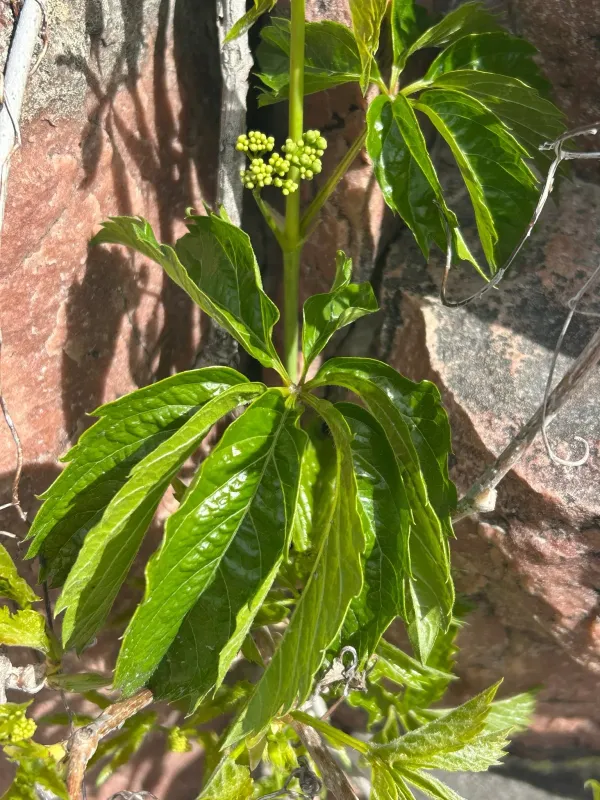
Thicket creeper (Parthenocissus inserta) is a vigorous woody deciduous vine belonging to the Vitaceae family. Unlike its relative, the Virginia creeper, this species lacks adhesive discs on its tendrils, meaning it relies on wrapping itself around supports rather than adhering directly to smooth surfaces.
Native to North America, the plant is widely distributed across various habitats, including forest edges and rocky slopes. Due to its robust nature, it has been introduced to many regions globally as a decorative plant, prized for its ability to cover large structures in a short period of time.
Regarding soil requirements, the species is highly adaptable and can grow in a wide range of types, from sandy loams to heavier clays. However, it performs best in well-drained, fertile soil. Adequate moisture is crucial during the establishment phase, though mature plants demonstrate significant drought tolerance.
The climate adaptation of this vine is excellent, with high frost tolerance allowing it to thrive in colder temperate zones. While it grows well in full sun, it also exhibits high shade tolerance, though its characteristic fiery red autumn foliage is brightest when the plant is exposed to consistent light.
Cultivation practices involve regular pruning to manage its rapid spread, as the vine can quickly overwhelm adjacent shrubs or smaller architectural elements if not contained. Propagation via stem cuttings is highly efficient, allowing gardeners to expand their coverage with minimal investment of time or money.
Main diseases and pests
Common pests include aphids and leafhoppers that may feed on the sap of young shoots, potentially causing leaf curling. Integrated pest management using insecticidal soaps is typically sufficient to maintain plant health and prevent infestations from escalating.
Fungal diseases like leaf spot and powdery mildew can occur, especially in poorly ventilated or excessively humid conditions. Regular monitoring and removing affected foliage, combined with fungicide applications if necessary, are the best defense strategies for gardeners.