
Thomson's Creeper
Parthenocissus thomsonii
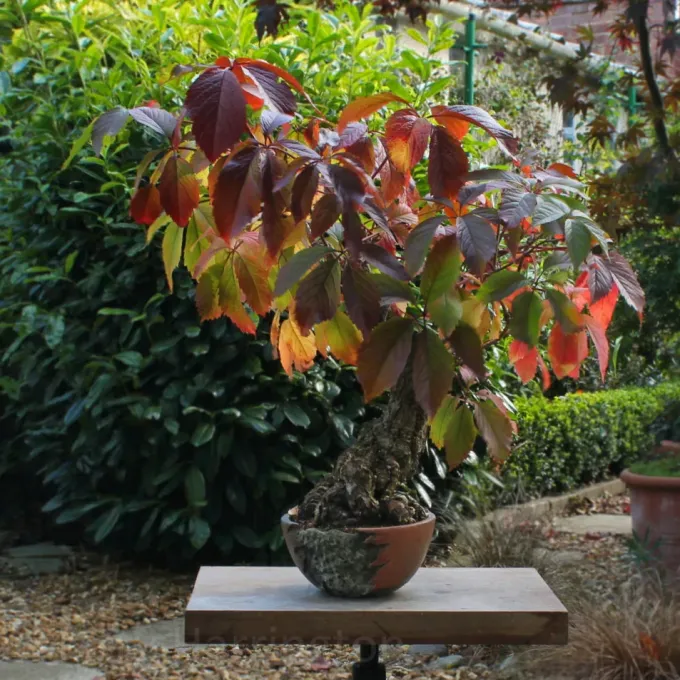
Description
Growing requirements
Thomson's Creeper (Parthenocissus thomsonii) is a vigorous deciduous vine belonging to the Vitaceae family. Originating from the mountainous regions of China and the Himalayas, it is valued for its elegant foliage and ability to climb vertical surfaces using tendrils with adhesive discs.
The plant thrives in fertile, well-draining soils with a neutral to slightly acidic pH level. It shows excellent adaptability to various light conditions, though it typically develops the most intense leaf coloration when grown in spots with partial shade to full sun exposure.
Proper agricultural practice requires installing robust trellises or supports during the initial planting stages. As the vine grows rapidly, annual pruning is recommended to control its spread and ensure the plant remains healthy and aesthetic throughout the season.
The species prefers a climate with moderate humidity and requires consistent watering, especially during prolonged dry spells in the summer. During the first two years of establishment, applying organic fertilizers can significantly enhance the development of the root system.
Host plant use is centered on vertical landscaping, providing excellent coverage for walls, fences, and pergolas. Its foliage, which often transitions from bronze-purple in spring to darker green and then brilliant red in autumn, provides high seasonal visual interest.
Main diseases and pests
Common pests affecting this vine include aphids and spider mites, which typically target the succulent new growth during hot and dry weather conditions. Regular inspection and natural soaps can mitigate these pest populations without damaging the plant.
Fungal issues such as powdery mildew may develop if the plant is situated in areas with poor air circulation. Maintaining proper spacing and removing debris around the base of the plant are essential cultural practices to prevent the spread of these pathogens.