
Lantana camara
Lantana camara L.
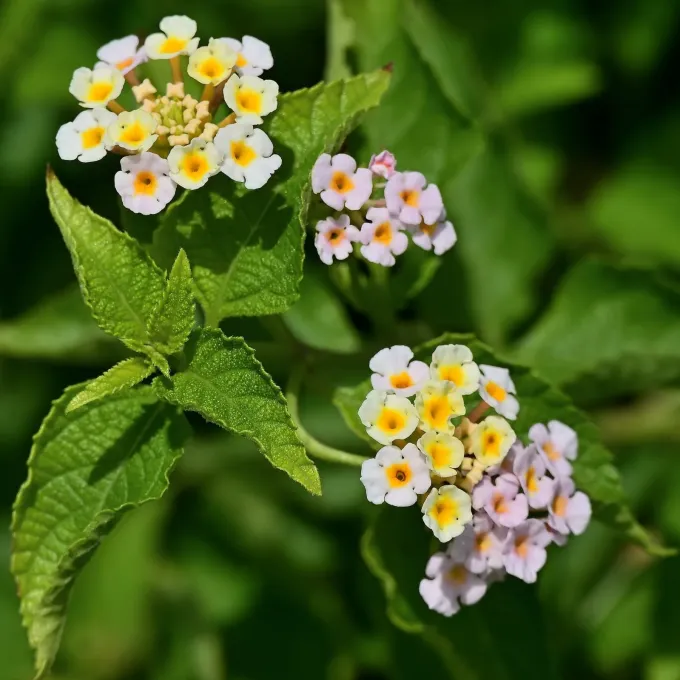
Description
Sowing dates
Lantana camara, commonly known as West Indian lantana, belongs to the Verbenaceae family. It is a perennial flowering shrub that is widely cultivated in tropical and subtropical regions, while in cooler climates, it is typically grown as an annual or a potted plant.
Propagation is primarily achieved through seeds or stem cuttings. Seed germination can be slow and often requires pre-treatment, such as soaking, to improve rates. Seeds should be sown in a warm, moist substrate during late winter.
Stem cuttings are the preferred method for many growers as they ensure genetic uniformity and faster maturity. Cuttings should be taken from healthy, non-flowering shoots and placed in a rooting medium with high humidity and warmth.
Seedlings or rooted cuttings should be acclimated to outdoor conditions gradually before final planting. This hardening-off process is essential to ensure the plant adapts to direct sunlight and wind.
Planting in the field occurs once the danger of frost has passed. Optimal spacing is crucial, allowing for good airflow between plants, which is necessary to prevent the buildup of humidity and potential fungal infections.
Growing requirements
Lantana camara thrives in full sun exposure. It requires at least six to eight hours of direct sunlight daily to produce high-quality flowers and maintain its characteristic vibrant, multicolored blooming pattern.
The plant prefers well-drained, fertile soil with a slightly acidic to neutral pH. Although it is relatively tolerant of poor soils, incorporating organic matter will significantly improve overall vigor and flowering capacity.
Watering should be deep and consistent during the establishment phase. Once established, the plant exhibits good drought tolerance; however, excessive drought can lead to reduced flowering and premature leaf drop.
Regular fertilization with a balanced, slow-release fertilizer during the growing season supports healthy development. Excessive nitrogen should be avoided to prevent overgrowth at the expense of blossom production.
Pruning is an essential agrotechnical practice for Lantana. Regular trimming helps maintain a compact shape, promotes continuous blooming, and prevents the plant from becoming woody and sparse over time.
Main diseases and pests
Whiteflies and spider mites are the most common pests affecting Lantana camara, particularly in indoor or greenhouse settings where air circulation is restricted and humidity is low.
Powdery mildew is a frequent fungal threat in humid or overcrowded conditions. Maintaining proper spacing and ensuring the foliage dries out quickly after watering are effective cultural control strategies.
Root rot caused by overwatering or poorly drained soil is a serious physiological threat. It often manifests as yellowing of leaves and sudden wilting of the stems, requiring immediate reduction in irrigation.
Due to its toxic properties, Lantana is considered an invasive weed in some parts of the world, specifically in pasture lands, as it contains compounds that are harmful if ingested by livestock.
Integrated pest management (IPM) is recommended for commercial growers. This involves regular scouting, the use of biological controls where possible, and the judicious application of insecticides only when necessary.