
Lantana montevidensis
Lantana montevidensis (Spreng.) Briq.
Description
Growing requirements
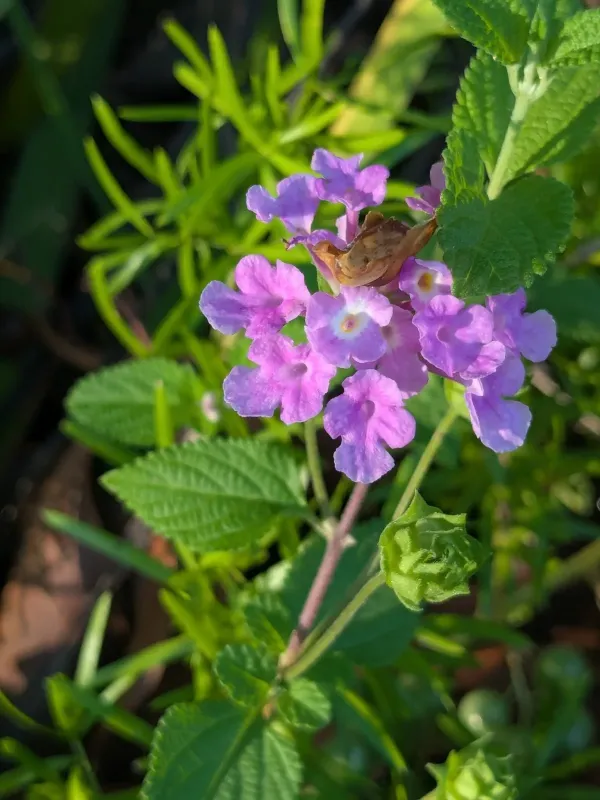
Lantana montevidensis, commonly known as trailing lantana, is a perennial flowering shrub belonging to the Verbenaceae family. It is recognized for its creeping growth habit and continuous production of vibrant, lilac-pink flower clusters.
Native to tropical and subtropical South America, this plant is widely appreciated in warmer climates for its drought tolerance and ability to cover large areas quickly. It serves as an excellent groundcover or trailing plant for hanging baskets.
Optimal growth requires full sun exposure, which is critical for maximizing flower production. In regions with partial shade, the plant often exhibits reduced flowering and becomes more susceptible to foliage diseases.
The plant thrives in well-drained, slightly acidic to neutral soil. While it is adaptable to various soil types, poor drainage is the primary limiting factor for healthy root development and overall plant longevity.
Maintenance involves routine pruning to maintain the desired shape and size, as the plant can become quite woody and sparse over time. Regular fertilization during the growing season supports continuous blooming.
Main diseases and pests
Whiteflies are among the most common pests that infest Lantana montevidensis, especially in greenhouses or during warm, humid spells. Managing them involves using insecticidal soaps or specific systemic pesticides.
Powdery mildew appears as white, dusty patches on leaves and stems, often triggered by high humidity and poor ventilation. Providing adequate spacing between plants is essential for prevention and disease control.
Spider mites can be problematic in hot, dry conditions. These small pests cause leaf stippling and webbing, which can be mitigated by increasing local humidity or applying appropriate acaricides.
Root rot, caused by excessive moisture, can quickly kill the plant. Ensuring the planting site or pot has excellent drainage is the best preventative measure against this fungal threat.
Aphids occasionally feed on tender shoot tips, causing distorted growth. Regular monitoring and physical removal or organic control methods are generally effective in preventing major infestations.