
Duranta erecta
Duranta erecta L.
Description
Growing requirements
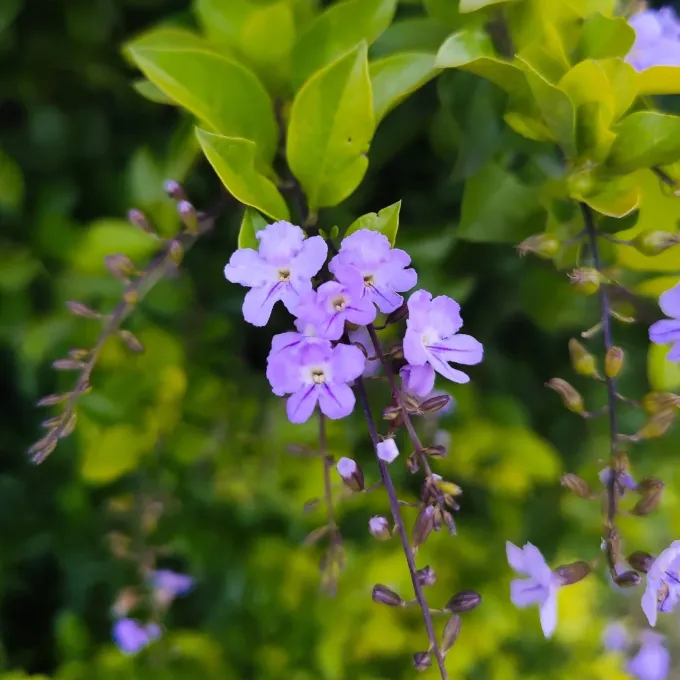
Duranta erecta L., known as the golden dewdrop, is a member of the Verbenaceae family. This evergreen shrub is widely cultivated in tropical and subtropical regions for its ornamental value. It is prized for its racemes of blue or white flowers and golden berries, which persist on the plant.
Originating from the Americas, the species thrives in warm climates and is highly sensitive to frost. It grows as a woody shrub, often forming dense, impenetrable thickets in its native environment. In an agricultural or landscaping context, it requires a frost-free environment to maintain its evergreen status.
The crop requires full sun to partial shade for optimal health. High light intensity is essential for promoting dense foliage growth and abundant flowering. In high-temperature areas, filtered light during the hottest hours of the day can help prevent leaf scorch and maintain color vibrancy.
Soil requirements are relatively adaptable, but the plant performs best in well-draining, moderately fertile soils with a pH ranging from 5.5 to 7.0. It is essential to avoid heavy, clay-based soils that retain too much moisture, as the roots are susceptible to oxygen starvation and subsequent rot.
Agronomic management includes frequent pruning to control the rapid growth habit of the plant. Fertilization with a balanced NPK fertilizer during the peak growing season supports continuous flowering. Irrigation should be consistent, ensuring the soil remains moist but never waterlogged.
Main diseases and pests
Common pests affecting Duranta erecta include whiteflies, scale insects, and spider mites. These pests thrive in dry and warm conditions, clustering on the undersides of leaves. Early detection is critical to prevent severe infestation and the subsequent development of sooty mold.
Root rot is the most significant disease, usually caused by over-irrigation or inadequate drainage. Pathogens such as Phytophthora target the root system, causing yellowing of foliage and wilting, which can lead to the total collapse of the plant if not addressed immediately.
Powdery mildew can infect leaves in humid conditions with poor air circulation. The characteristic white fungal growth inhibits photosynthesis and weakens the plant. Managing humidity levels and thinning the crown through pruning effectively reduces the incidence of this disease.
Chemical control involving systemic insecticides and fungicides should be used judiciously. Rotation of products is recommended to prevent the development of pesticide resistance in pest populations, particularly with whiteflies and mites which reproduce rapidly.
Cultural control practices, such as removing debris from under the shrub and maintaining proper plant spacing, are essential for disease prevention. Ensuring adequate sunlight exposure helps maintain a dry canopy, which significantly lowers the risk of fungal infections in the shrub.