
Duranta stenostachya
Duranta stenostachya Tod.
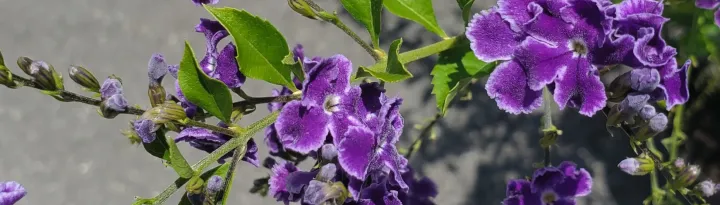
Description
Growing requirements
Duranta stenostachya is a perennial evergreen shrub belonging to the Verbenaceae family. It is recognized for its elegant, slender, and elongated inflorescences, which distinguish it from the more common Duranta erecta often used in landscaping.
Originating from the tropical regions of South America, this plant is adapted to warm and humid climates. Its natural habitat is typically within tropical forests where light levels are sufficient, and the soil remains consistently moist but well-drained.
Botanically, the plant develops a woody structure with opposite leaves. The key feature of this specific species is the configuration of its floral spikes, which provide a unique aesthetic appeal. It serves as an excellent specimen for botanical collections and warm-climate garden design.
To cultivate Duranta stenostachya successfully, it requires a bright location with partial shade to prevent leaf scorching. The ideal soil profile is a fertile, well-draining substrate rich in organic matter. Avoid heavy clay soils that retain excess moisture.
The agrotechnical requirements include maintaining a consistent watering schedule and applying balanced fertilizers during the growing season. In cooler climates, the plant must be kept in containers to allow for indoor protection during the winter months, as it is not frost-tolerant.
Main diseases and pests
The plant is susceptible to common pests such as whiteflies, spider mites, and scale insects, especially when grown in indoor conditions or areas with low humidity. Integrated pest management, including regular monitoring and the use of insecticidal soaps, is highly recommended.
Fungal diseases are the primary threats, specifically those affecting the roots due to poor drainage. Ensuring sufficient air circulation and allowing the top layer of the soil to dry slightly between waterings are critical preventative measures against rot and other pathogens.