
Pilea cadierei
Pilea cadierei Gagnep. & Guillaumin
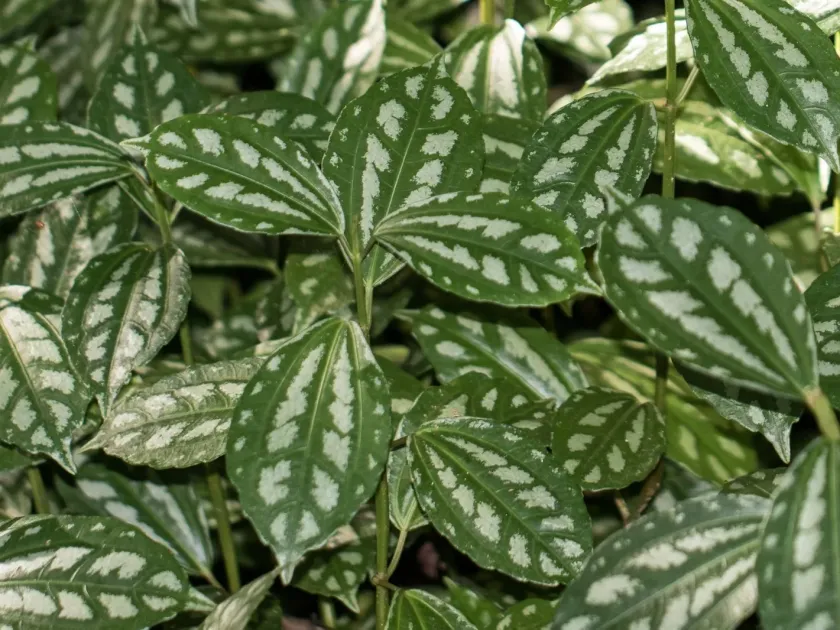
Description
Growing requirements
Pilea cadierei, widely known as the aluminum plant, belongs to the Urticaceae family. Originating from the tropical regions of Southeast Asia, this herbaceous perennial is highly regarded in horticulture for its striking, silver-patterned foliage.
The culture thrives best in bright, indirect light. Maintaining proper light levels is essential, as too little light causes the stems to become leggy, while direct sunlight can scorch the delicate leaves and fade the distinct metallic markings.
Optimal growth requires a temperature range between 18°C and 25°C. The plant is sensitive to cold shocks and drafts; therefore, it should be protected from sudden temperature drops, which can lead to leaf drop and stunted development.
Soil requirements for Pilea cadierei involve a well-draining, porous substrate. A mix of peat-based potting soil combined with perlite or coarse sand ensures sufficient oxygen circulation around the root zone, preventing compaction.
Consistent watering is crucial for this species. The soil should be kept uniformly moist but never waterlogged. High humidity is also beneficial, and supplemental misting or the use of humidity trays will help replicate the natural tropical environment.
Main diseases and pests
The primary pests affecting Pilea cadierei are spider mites and mealybugs. These organisms thrive in dry environments and can quickly infest the plant, causing foliage discoloration and loss of vitality.
Scale insects represent another significant threat, attaching themselves to stems and undersides of leaves to feed on sap. Regular monitoring and physical removal are often the first lines of defense in effective crop management.
Fungal diseases, specifically root rot, are commonly associated with poor drainage and overwatering. When the soil remains soggy, pathogens can easily colonize the roots, leading to rapid decay of the plant tissue.
Symptoms of distress usually include wilting, chlorosis of the lower leaves, and soft, mushy stems. Early diagnosis allows for repotting in fresh, dry soil and pruning of the infected root sections.
Proper environmental control, including balanced humidity and appropriate watering schedules, significantly mitigates the risk of both pest infestations and pathogenic infections in controlled environments.