
Gyrinops versteegii
Gyrinops versteegii
Description
Sowing dates
Propagation of this culture is mainly carried out by seeds or cuttings in specialized forest nurseries. Seeds have low viability and should be sown immediately after collection, maintaining high substrate humidity.
Seedling preparation requires a controlled environment protected from direct sunlight in the early stages of growth. The optimal time for planting seedlings in the field is at the beginning of the rainy season, ensuring high survival rates.
The planting distance usually ranges from 3x3 meters to 4x4 meters, allowing sufficient space for crown development and root system expansion of each individual tree.
During the first years, young trees require regular weeding and mulching around the root zones to retain moisture. Controlling weed growth prevents competition for essential nutrients.
Fertilizer application during the initial growth period promotes faster vegetative mass gain, which is crucial for the subsequent formation of the valuable heartwood resin.
Growing requirements
Gyrinops versteegii is a tropical culture with strict climatic requirements. Successful growth depends on consistently high air temperatures without significant fluctuations throughout the year.
The plant thrives in regions with a humid tropical climate and evenly distributed rainfall. It is sensitive to prolonged drought periods, which can significantly hinder the development of young trees.
The culture is relatively tolerant of various soil types, but thrives best on deep, well-drained, and fertile loamy soils. Waterlogging in the root zone is a critical factor and can lead to plantation failure.
Optimal soil acidity (pH) for development is between slightly acidic to neutral. Regular monitoring of soil composition is recommended to adjust micronutrient levels as needed.
Trees require well-lit spaces, although young specimens tolerate partial shading. Mature trees are characterized by a high demand for sunlight to support active photosynthesis and resin production.
Yield
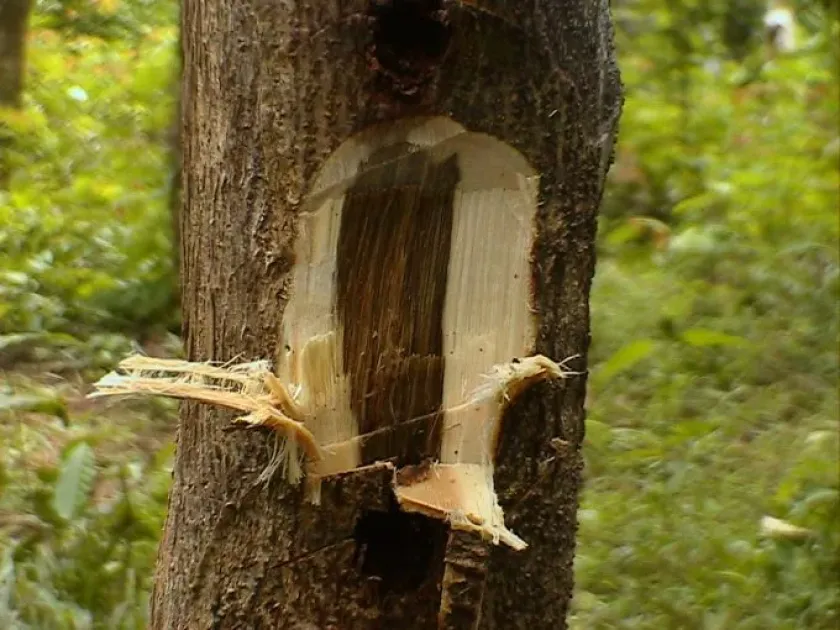
The main economic value lies in the resinous wood, known as agarwood, which forms as a result of natural or artificial fungal infection within the tree trunk.
The resin maturation process takes significant time, often exceeding 7–10 years after inoculation. Early harvesting does not yield high-quality products demanded by the perfumery market.
Commercial wood yield depends on the method of stimulating resin production. Modern agro-technical approaches include the introduction of specialized fungal inoculants into the trunk.
The quality of the final product is determined by the concentration of essential oils and aromatic compounds. Yield varies depending on the tree age and environmental conditions.
Productivity is measured not by wood weight, but by the volume of extracted valuable material, which is used in the production of high-end incense, essential oils, and pharmaceuticals.
Main diseases and pests
Major biological threats include various fungal pathogens that affect the root system, particularly in conditions of excessive moisture and poor soil drainage.
Pests such as wood-boring beetles and stem borers represent a serious danger to young plantations by damaging tissues and slowing down tree growth significantly.
Leaf-eating insects can cause damage to nursery seedlings, reducing leaf surface area and overall tree viability during the critical crown-formation stage.
For disease control, it is recommended to follow strict sanitary rules in the plantation, timely removal of infected tree parts, and the use of biological plant protection methods.
The risk of infection spread increases in overcrowded plantations; therefore, proper agrotechnics and regular thinning are essential preventive measures in commercial production.
Harvesting
Harvesting is a complex technological operation requiring precise determination of the degree of fungal trunk infection, which stimulates the production of valuable aromatic resin.
Experts use methods of partial wood selection or complete felling of trees that have reached the optimal age to extract fragments with high concentrations of resinous inclusions.
The cleaning process involves careful separation of healthy tissues from infected areas, requiring skilled manual labor and deep knowledge of the wood's internal structure.
After collection, the wood undergoes primary processing, including drying and sorting based on quality characteristics, which is critical for establishing market prices for agarwood.
The collected material is either processed through distillation to obtain valuable oils or used as natural incense, which determines the subsequent logistics and packaging methods.