
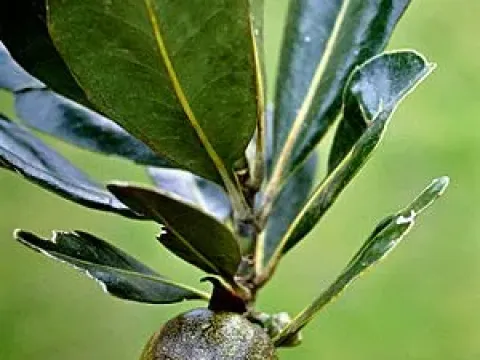
Strasburgeria robusta
Strasburgeria robusta
Strasburgeria robusta is an evergreen woody plant belonging to the monotypic family Strasburgeriaceae. It is a unique endemic species found exclusively in the forest areas of New Caledonia in the South Pacific.
What the section contains
Strasburgeria robusta
The plant prefers humid tropical conditions characteristic of the montane forests within its natural habitat. It requires consistently high air humidity and well-drained, organic-rich soils with an acidic or neutral pH level.
Due to its specialized nature, the plant is not adapted to industrial cultivation in climatic zones with marked seasonality or low temperatures. The optimal temperature regime for healthy development remains within the narrow range of a tropical climate without significant fluctuations.
Botanically, the species is characterized by large, leathery leaves with serrated edges and striking five-petaled flowers. The timber is known for its high density, which is reflected in the specific epithet robusta, meaning "strong" or "robust."
Commercial agricultural use of this species is non-existent, as it holds high conservation value and is strictly protected. Its cultivation is limited primarily to botanical gardens dedicated to preserving genetic diversity.
The main threats to the Strasburgeria robusta population include the degradation of its natural habitat due to human activity, such as logging and the encroachment of invasive plant species.
Due to its narrow endemism, any localized outbreaks of fungal diseases common in wet tropical forests could inflict severe damage on the limited population of the species.
Pests, such as specific forest insects and tropical scale insects, may affect the leaf surface; however, in the wild, these factors are typically balanced by natural ecosystem dynamics.
Climate change, which alters rainfall patterns in the mountains of New Caledonia, represents a critical risk threatening the survival of this species in the long term.
The lack of widespread cultivation makes large-scale phytosanitary measures unfeasible, meaning that the preservation of the species relies entirely on strict protection of its native habitat.