
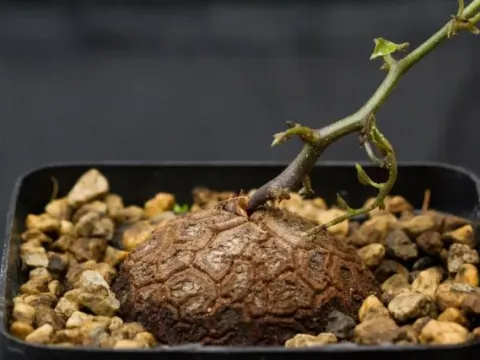
Succulent yam
Dioscorea succulenta
Planting of the succulent yam typically begins in the spring once the soil temperature is consistently above 15 degrees Celsius. Tuber segments, each containing at least one healthy bud, are the preferred material for establishing new plantings due to their reliability compared to seeds.
What the section contains
Succulent yam
The planting depth is usually set between 10 and 15 centimeters to ensure that the developing tubers are protected from surface soil temperature fluctuations. Proper spacing is essential to allow for the significant vining growth that characterizes this species.
This crop belongs to the Dioscoreaceae family and thrives in loose, well-draining soils with a neutral pH. Adequate organic matter content is highly beneficial for the development of large, high-quality tubers in commercial settings.
The plant originates from tropical regions, requiring high humidity and consistent warm temperatures to reach its full yield potential. While it favors sunny locations, young shoots may require partial shade in regions with extremely intense sunlight to prevent desiccation.
Support structures, such as trellises or stakes, are a requirement for succulent yam production. The vines are vigorous climbers, and providing support ensures better aeration, which reduces the incidence of fungal diseases among the foliage.
Root rot is the most significant threat to the succulent yam, primarily caused by waterlogged soils and poor drainage. Management involves strictly controlling the moisture level in the root zone throughout the growing season.
Pests such as aphids and spider mites can infest the foliage, particularly in humid greenhouse conditions. Regular monitoring and, if necessary, the application of appropriate pest control measures are critical for maintaining healthy vegetation until harvest.
Harvesting is performed once the foliage has completely yellowed and withered, indicating that the tuber has reached maturity. This timing is crucial to ensure optimal starch content and long-term shelf stability of the harvested product.
Great care must be taken during the digging process to prevent mechanical damage to the tubers, as wounds can easily become sites for bacterial and fungal infection. Post-harvest, the tubers should be cured in a dry, ventilated area before long-term storage.